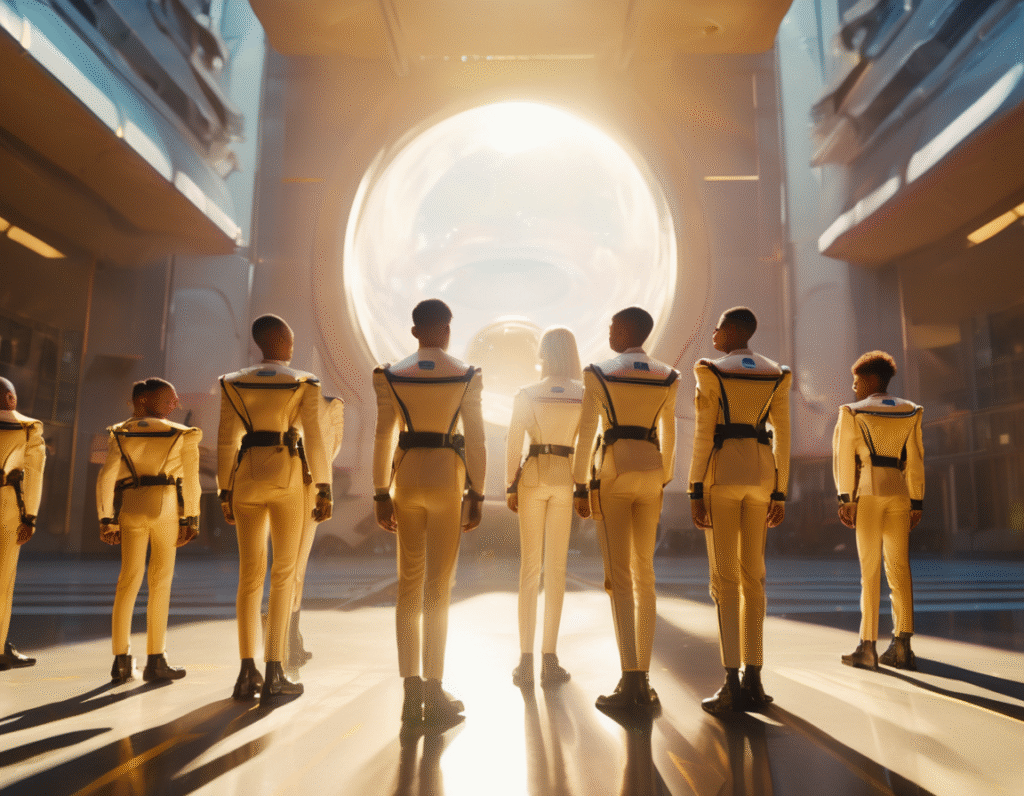
The Future of a Franchise Rests on Young Shoulders Star Trek is at a critical juncture. Just a few years ago, it flourished with five concurrent series, each with a distinct style and audience. That era has sharply contracted, with multiple shows ending prematurely. While Strange New Worlds continues for a limited run, the only project with a confirmed future is the new series, Starfleet Academy, set to premiere in January. The reception of this show could very well shape the future of the entire franchise. That is a significant burden, but it is fitting given the series subject matter. Set in the 32nd century, a scrappy, rebuilding era for the Federation, the show follows a group of teenage cadets at the legendary academy. This focus on a younger cast led some fans to dismiss it as CW Trek before seeing a single frame. As a spinoff of Discovery, the series inherits certain traits, including sleek, shiny sets and ongoing narrative threads. A key plot point involves the Federation, still recovering from a collapse, navigating diplomacy with former member worlds. This setting justifies the cadets involvement in high-stakes situations; in a fragile, rebuilding galaxy, everyone must wear multiple hats, much like a startup company. The far-future setting allows for creative world-building. Starfleet is now a truly integrated institution where a Klingon science cadet or a pioneering holographic student raises no eyebrows. The show introduces new alien species to the Trek universe, expanding its lore. Despite its new direction, the series includes connections to legacy characters. While a planned regular role for Sylvia Tilly from Discovery did not materialize, familiar faces appear. The brilliant Tig Notaro returns as engineer Jett Reno, and Oded Fehr reprises his role as Admiral Vance. Perhaps the most exciting return is The Doctor from Voyager, whose holographic nature allows him to appear centuries later with no convoluted explanation, his personality delightfully intact. They are joined by compelling new characters, including a part-Klingon, part-JemHadar security officer and a Lanthanite chancellor played by Oscar winner Holly Hunter. Another Oscar winner, Paul Giamatti, portrays a major villain. The production values are notably high. Extensive location shooting in Ontario provides a sunny, collegiate atmosphere, while studio-built sets at Pinewood Toronto feature wide, bustling hallways filled with diverse alien species and robots, suggesting a significant visual effects budget. This leads to the paramount question of cost. With extensive practical sets, high-profile actors, and plentiful CGI, estimates suggest a per-episode budget that could rival or exceed other current Trek series, potentially reaching blockbuster film levels for a ten-episode season. This underscores the financial pressures behind Paramounts recent cost-cutting, which included canceling other Trek shows. Therefore, Starfleet Academy carries a tremendous dual burden. Within its story, the cadets will help determine the future of Starfleet. In reality, the shows success may determine the future of this entire era of Star Trek. For fans, this is a nerve-wracking proposition, as no one wants the franchise to go dormant again. Based on its ambitious scope and solid foundation, Starfleet Academy appears ready to face the challenge.