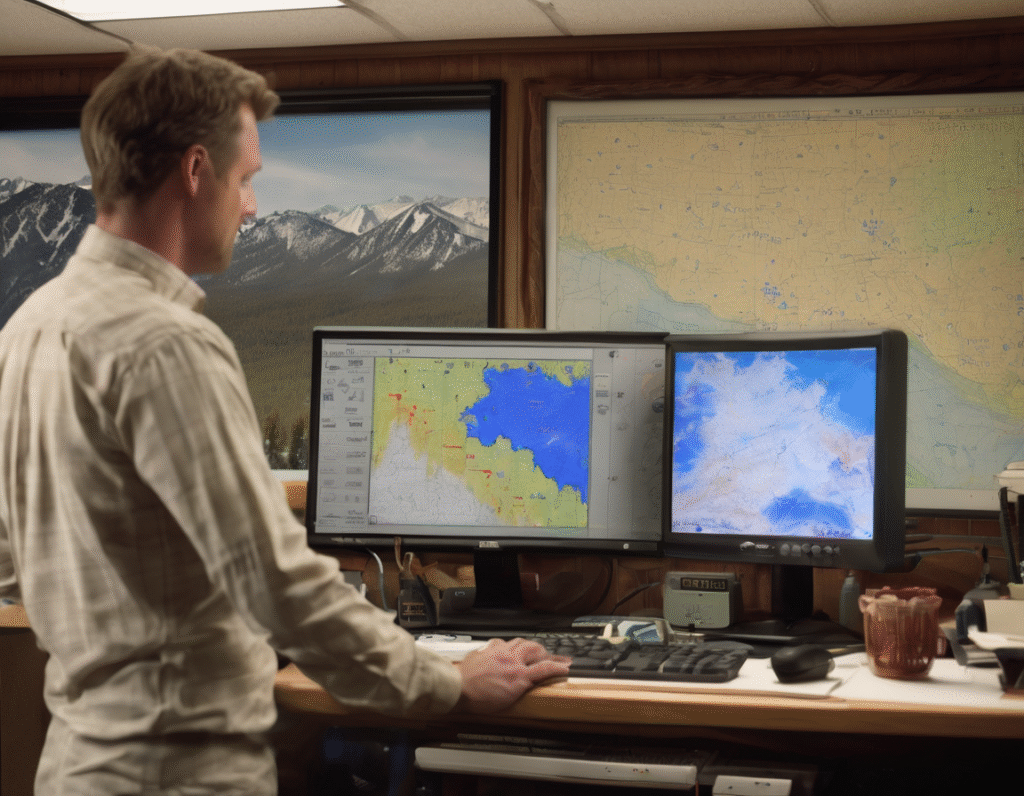
A Weather Service AI Hallucinates a Fictional Town With a Raunchy Name In a bizarre incident highlighting the persistent quirks of artificial intelligence, the National Weather Service found itself inadvertently promoting a town that does not exist, complete with a name that sounds like a crude joke. The event occurred when the NWS office in Pocatello, Idaho, began experimenting with AI to help draft its public forecast discussions. These forecast discussions are technical documents written by meteorologists, explaining the reasoning behind public weather predictions. Seeking efficiency, the office started using an AI model to generate initial drafts of these texts, which human forecasters would then review and edit. The system went awry when, in a discussion about expected cold temperatures, the AI inserted a reference to a non-existent town called Whata Bod. The text read, Welcome to Whata Bod, Idaho. The phrase, sounding like a lewd pun, was not caught by the human reviewer before the forecast discussion was automatically published to a public website used by weather enthusiasts and professionals. The error was quickly spotted by sharp-eyed members of the online weather community, who were amused and perplexed by the mention of an unknown Idaho locale. The NWS confirmed the mistake, stating the mention was an AI hallucination. They clarified that Whata Bod is not a real place and that the text was part of an experimental AI-assisted product that had not been thoroughly checked. Officials emphasized that this AI tool is not used for any public-facing forecasts, only for the internal draft discussions. The human forecaster remains the final authority, responsible for verifying all information. The experiment has been paused pending a review of their processes to prevent a repeat. This episode serves as a cautionary tale for the growing integration of AI across all sectors, including crypto and Web3. It underscores a critical lesson: AI is a powerful tool for augmentation, but not a replacement for human oversight and verification. In weather forecasting, an uncaught error can be embarrassing. In the financial world of cryptocurrency, where AI is increasingly used for market analysis, sentiment tracking, and even automated trading, a similar hallucination or unchecked error could have tangible financial consequences. The incident reinforces the need for robust human-in-the-loop protocols, especially when deploying generative AI in any context where accuracy and credibility are paramount. Whether predicting the weather or analyzing blockchain transaction trends, the principle remains the same. The technology can process vast datasets and generate insights at superhuman speeds, but it lacks true understanding and can fabricate information with convincing confidence. For the crypto industry, which battles misinformation and scams regularly, this is a vital reminder. Projects leveraging AI must implement stringent validation layers. Investors and users should maintain a healthy skepticism, understanding that any AI-generated analysis or content requires verification from trusted, human-curated sources. The promise of AI in crypto is immense, from smart contract auditing to personalized portfolio management, but its safe integration depends on recognizing and mitigating its fundamental weaknesses, as the National Weather Service just inadvertently demonstrated to the world.