
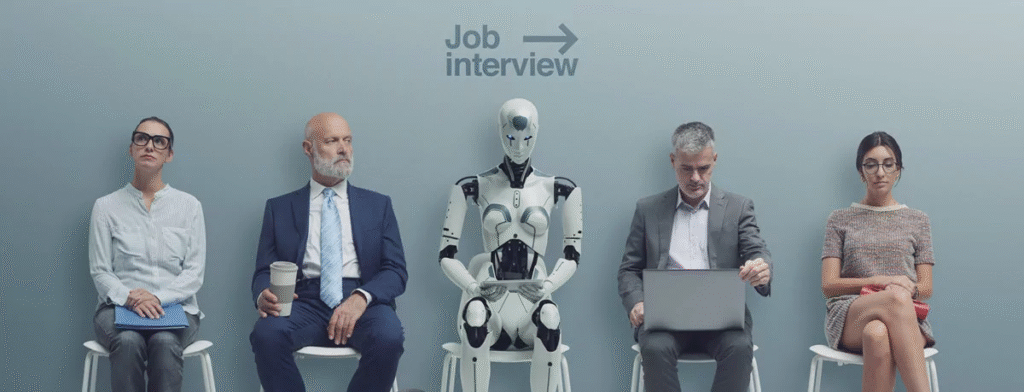
Microsoft AI CEO Mustafa Suleyman has made a striking prediction about the future of artificial intelligence in the workplace, stating that most white-collar tasks will be fully automated by AI within the next 12 to 18 months. The prediction represents one of the most specific timelines offered by a major tech executive regarding widespread job automation.
“I think that we’re going to have human-level performance on most, if not all, professional tasks,” Suleyman said in an interview with the Financial Times. “So white-collar work, where you’re sitting down at a computer, either being a lawyer or an accountant or a project manager or a marketing person—most of those tasks will be fully automated by an AI within the next 12 to 18 months.”
The prediction comes at a time when AI adoption in professional settings has accelerated dramatically. Suleyman noted that the transformation is already visible in software engineering, where developers are using AI-assisted coding for the vast majority of their code production.
“It’s a quite different relationship to the technology, and that’s happened in the last six months,” he explained. “The speed of adoption has been remarkable, and we’re only at the beginning of what these models can accomplish.”
Suleyman’s prediction adds to a growing chorus of warnings from AI industry leaders about impending workforce disruption. Dario Amodei, CEO of Anthropic, has previously stated that AI could eliminate half of entry-level white-collar jobs. Stuart Russell, a leading AI researcher, has suggested that political leaders are considering scenarios involving 80% unemployment due to AI.
“We, as the producers of this technology, have a duty and obligation to be honest about what is coming,” Amodei told Axios. “I don’t think this is on people’s radar.”
The Microsoft AI chief’s prediction extends beyond simple task automation to encompass entire professional roles. Lawyers conducting legal research, accountants preparing financial statements, project managers coordinating teams, and marketing professionals creating campaigns could all see significant portions of their work handled by AI systems within the next year and a half.
Microsoft has been at the forefront of bringing AI to the workplace through products like Copilot, which integrates into Microsoft 365 applications. The company has also made substantial investments in AI companies including OpenAI and Anthropic, positioning itself to benefit from the very disruption Suleyman predicts.
The economic implications of such rapid automation could be profound. While AI proponents argue that the technology will create new job categories and increase productivity, critics warn that the transition could be traumatic for workers and communities unprepared for the pace of change.
Some industry observers have noted the potential conflict between Suleyman’s predictions and Microsoft’s business interests. As a company selling AI tools to businesses, Microsoft’s executives have incentives to emphasize both the capabilities and the urgency of AI adoption.
Suleyman acknowledged the concerns about workforce displacement during his interview but emphasized what he sees as the inevitability of the transition. “We can either embrace this technology and shape how it develops, or we can resist and be left behind,” he said. “The question isn’t whether AI will transform white-collar work—it’s how we prepare for that transformation.”
The Microsoft AI CEO’s prediction follows recent reports of “AI fatigue” among software engineers, with workers experiencing burnout as they’re expected to take on more work enabled by AI tools. This suggests that even before full automation, AI is already reshaping workplace expectations and stress levels.