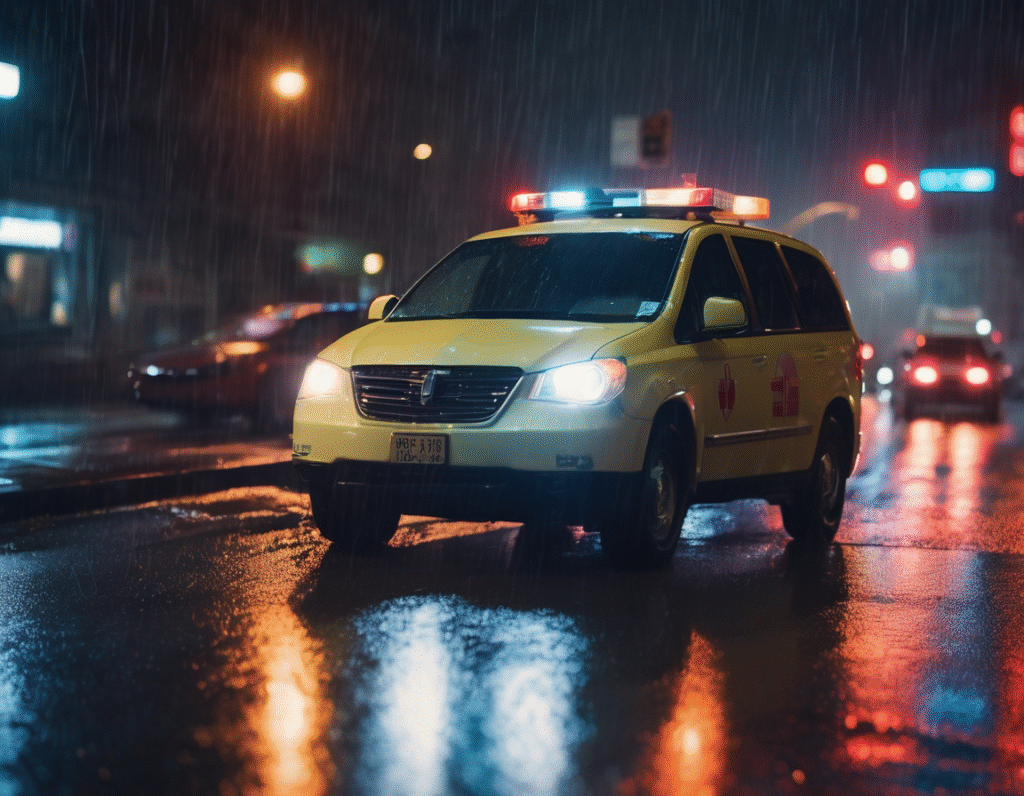
A Driverless Dilemma: When Autonomous Vehicles Clash With Emergency Response A recent incident involving a Waymo robotaxi in downtown Los Angeles has reignited a critical debate about the readiness of autonomous vehicles for complex urban environments, especially during emergencies. According to witnesses and official reports, the vehicle became immobilized, blocking an ambulance that was rushing to the scene of a mass shooting. The event unfolded as first responders were racing to treat victims. Video from the scene shows an ambulance, with lights and sirens active, attempting to navigate traffic. A Waymo vehicle, part of the company’s expanding driverless taxi service, is seen stopped in a lane ahead. The ambulance driver is heard yelling for the vehicle to move. Witnesses reported the autonomous car remained stationary for approximately a minute before finally proceeding, causing a crucial delay. In the aftermath, the company provided a brief statement acknowledging the event and stating its compliance with local traffic laws, but declined further detailed comment, citing an ongoing review. The lack of immediate, detailed public explanation has drawn criticism from city officials and public safety advocates. They argue that transparency is paramount when emerging technologies directly impact life-or-death situations. This incident strikes at the core of challenges facing the autonomous vehicle sector. Proponents of the technology argue that self-driving cars, free from human error, will ultimately make roads far safer. They are programmed to follow traffic rules meticulously. However, critics point out that urban environments, particularly emergency scenarios, require nuance, judgment, and sometimes the deliberate bending of rules that a human driver understands instinctively. An ambulance with sirens blaring creates a moral and practical imperative to clear a path, even if it means briefly edging into a crosswalk or a bus lane. The question for the industry and regulators is whether current artificial intelligence and sensor systems can be trained to recognize and appropriately respond to the chaotic and high-stakes context of an emergency. It is a different problem than navigating routine traffic or handling a construction zone. The software must prioritize human life in a dynamic hierarchy, potentially overriding standard operational protocols. For the crypto and Web3 community, this event serves as a parallel case study in the adoption of disruptive, software-driven systems. It highlights the gap between theoretical protocol and messy reality. Just as a smart contract executes code without regard for external nuance, an autonomous vehicle’s decision tree is limited by its programming and sensory input. The incident underscores that deploying such technologies at scale requires not just technical prowess, but robust frameworks for accountability, real-time human oversight options, and clear communication protocols when failures or edge cases occur. The path forward likely involves more sophisticated simulation training focused on emergency scenarios, potential remote assistance protocols for first responders to commandeer or direct autonomous vehicles in their vicinity, and closer collaboration between tech companies and municipal emergency services. The goal is to ensure these vehicles become cooperative agents in public safety ecosystems, not unpredictable obstacles. As autonomous vehicle services expand, their integration into society will be judged not by their performance on sunny days, but by their actions during a crisis. The Los Angeles ambulance blockage is a stark reminder that for this technology to earn public trust, it must prove it can handle humanity’s most urgent and dire moments, not just its daily commute.