
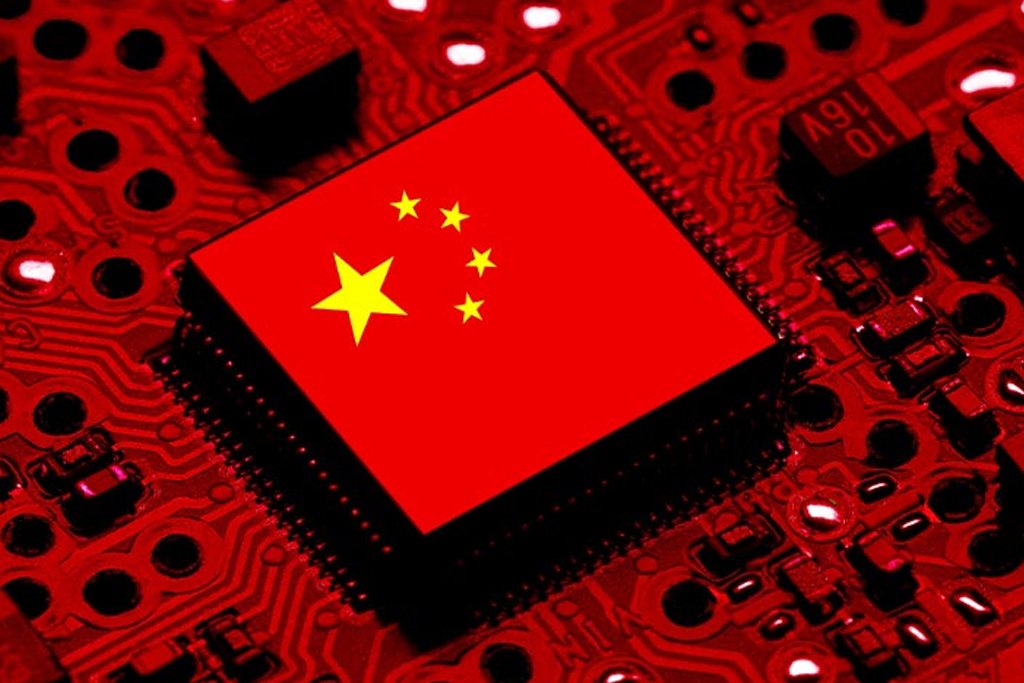
China’s Hua Hong Group Develops Advanced AI Chip Manufacturing Technology
China’s Hua Hong Group has announced a groundbreaking advancement in AI chip manufacturing technology, positioning the country as a serious contender in the global semiconductor race. This development represents a significant milestone in China’s efforts to achieve technological self-sufficiency in the critical AI chip manufacturing sector.
The announcement has sent ripples through the technology industry, as nations compete for dominance in artificial intelligence hardware. Hua Hong Group’s breakthrough could reshape the global supply chain for AI processors and reduce reliance on Western technology.
What Makes This breakthrough Significant
Hua Hong Group’s new manufacturing technology enables the production of more advanced AI chips with improved efficiency and reduced costs. The company has developed proprietary processes that allow for higher transistor density while maintaining power efficiency.
This advancement addresses one of the biggest challenges in AI chip design: balancing computational power with energy consumption. As AI applications become more complex, the need for efficient, powerful chips has never been greater.
Technical Details of the Manufacturing Process
The new technology utilizes advanced lithography techniques that allow for finer circuit patterns than previous generations. Hua Hong Group claims their process can produce chips at 7nm and below, though industry experts are still verifying these claims.
The manufacturing improvements also include novel approaches to chip architecture that optimize AI-specific workloads. These specialized designs can significantly outperform general-purpose processors for machine learning tasks. The company has invested over $2 billion in research and development to achieve these results, focusing on three key areas: precision, efficiency, and scalability.
Impact on Global AI Chip Manufacturing
This development challenges the dominance of companies like NVIDIA and AMD in the AI chip market. If Hua Hong Group can successfully scale production, it could lead to increased competition and potentially lower prices for AI hardware worldwide.
The announcement also has geopolitical implications, as it strengthens China’s position in the ongoing technology competition with the United States. Both nations are racing to develop superior AI capabilities, and semiconductor technology is a critical component of that rivalry. The global AI chip manufacturing landscape is undergoing a fundamental transformation as countries seek to secure their technological futures.
Industry Reactions and Market Response
Technology analysts have expressed cautious optimism about Hua Hong Group’s announcement. While the breakthrough is promising, significant challenges remain in scaling production to meet global demand.
Major tech companies are closely monitoring developments, as a reliable alternative supplier could reduce dependency on current market leaders. The potential for partnership or technology licensing deals has also generated interest.
Challenges Ahead for Hua Hong Group
Despite the breakthrough, Hua Hong Group faces several obstacles. Semiconductor manufacturing requires not just advanced designs but also sophisticated equipment and quality control processes.
The company must also navigate export restrictions and supply chain challenges. Access to advanced manufacturing equipment remains limited due to international trade restrictions targeting China’s semiconductor industry.
Future Implications for AI Development
The advancement in China AI chip manufacturing could accelerate global AI development by making powerful processors more accessible. Lower costs and increased availability of AI chips could enable more companies and researchers to pursue advanced AI projects.
However, this also raises questions about technology governance and standards. As different regions develop competing chip technologies, ensuring interoperability and security will become increasingly important.
Conclusion
Hua Hong Group’s breakthrough in AI chip manufacturing represents a pivotal moment in the global technology landscape. The company’s advancement demonstrates China’s growing capabilities in semiconductor technology and signals intensifying competition in the AI hardware market.
As the industry evolves, the implications of this development will extend far beyond manufacturing, affecting everything from AI research to international technology policy. The world will be watching closely to see how Hua Hong Group translates this breakthrough into commercial success.