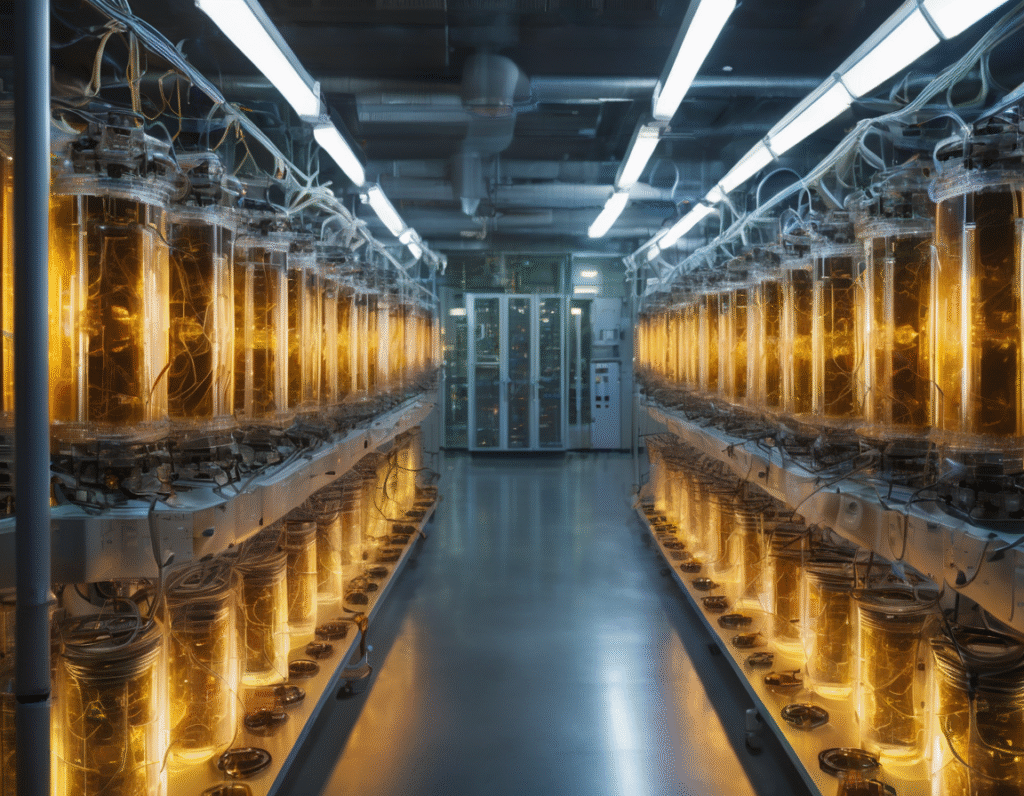
The next evolution in computing is not silicon, it is biological. A new wave of research is pushing the boundaries by developing data centers powered not by traditional semiconductors, but by living human brain cells. This emerging field, often called biocomputing or wetware, aims to harness the unparalleled efficiency of the human brain to tackle complex computational problems. The core concept involves creating specialized organoids, which are three-dimensional clusters of lab-grown human brain cells. These are not full brains, but simplified models that exhibit basic neurological functions like learning and information processing. Researchers connect these organoids to computer systems, creating a hybrid machine where biological neurons handle the computation. The potential advantage is staggering. The human brain operates with breathtaking energy efficiency, using roughly the power of a dim light bulb to perform tasks that would require a room-sized supercomputer. Proponents envision future data centers where banks of biological processors solve specific, intricate problems like advanced AI pattern recognition or complex financial modeling while consuming a fraction of the energy of a conventional farm of GPUs. This could dramatically reduce the massive electricity demands and environmental footprint of our current digital infrastructure. This technology also opens doors to new types of computing. Neural networks in AI are software attempts to mimic the brain’s structure. A wetware computer is the real thing. It could potentially learn and adapt in ways fundamentally different from digital systems, offering novel approaches to machine learning and data analysis that are currently beyond our reach. However, the path to a brain-cell-powered cloud is fraught with profound technical and ethical challenges. Keeping millions of living cells alive and functional outside a body requires meticulously controlled environments of temperature, pressure, and nutrition, making the engineering far more complex than cooling a server rack. The scalability of growing and maintaining vast, stable biological processing units is a monumental hurdle. The ethical questions are even more pressing. At what level of complexity does a cluster of brain cells develop a form of consciousness or the capacity for suffering? The use of human neurons, even lab-grown ones, forces a serious conversation about the moral status of these biological constructs. Robust ethical frameworks would need to be established long before any commercial deployment. For the crypto and Web3 space, the implications are speculative but fascinating. A wetware infrastructure could theoretically process blockchain consensus mechanisms or execute smart contracts with radical efficiency. It might enable new forms of decentralized autonomous organizations (DAOs) with organic learning components. Yet, it also introduces a centralizing physical constraint—biological systems are fragile and require centralized, controlled lab environments, which seems at odds with the distributed ethos of blockchain. While the vision of biopowered data centers remains in early experimental stages, it represents a bold and unsettling frontier. It challenges our definitions of both technology and life, promising a future where the line between computer and organism is permanently blurred. The industry is watching, aware that the next major leap in processing power may not come from a foundry, but from a lab.