
Neuro-Symbolic AI Breakthrough Cuts Energy Use by 100x — The Sustainable Future of Artificial Intelligence
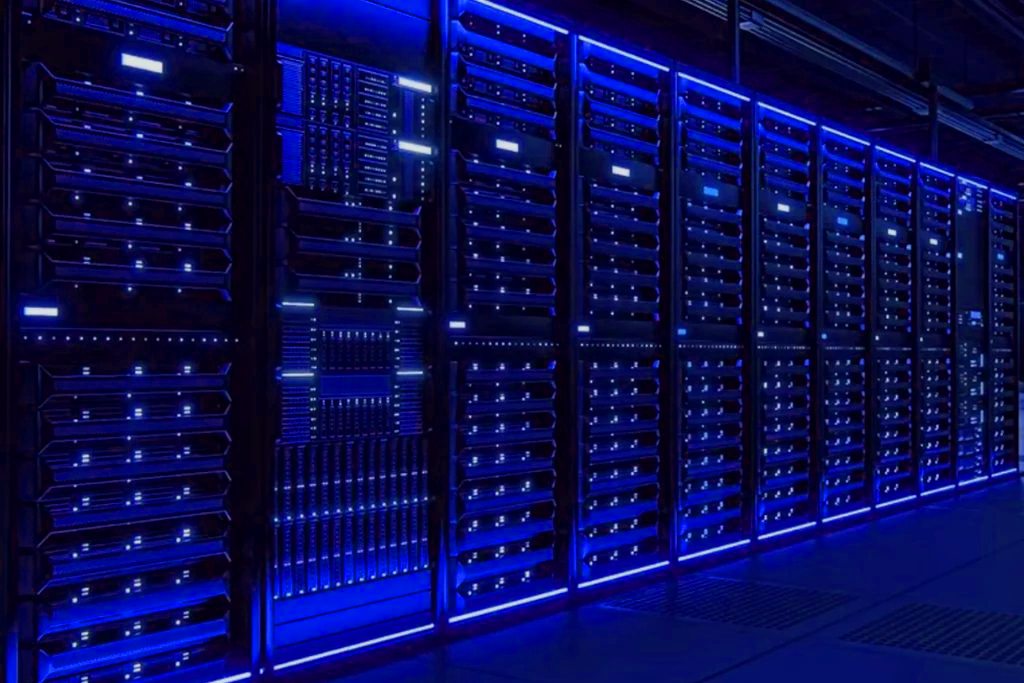
Artificial intelligence is devouring electricity at an alarming rate. In 2024, AI systems and data centers in the United States consumed roughly 415 terawatt hours of power — more than 10% of the country’s total electricity production. By 2030, that figure is projected to double. But a breakthrough from researchers at Tufts University’s School of Engineering could flip that trajectory entirely.
Matthias Scheutz, the Karol Family Applied Technology Professor, and his team have developed a new AI architecture that slashes energy consumption by up to 100 times *while simultaneously improving accuracy*. Their work, set to be presented at the International Conference on Robotics and Automation (ICRA) in Vienna this May, could represent the most significant step yet toward sustainable AI.
What Is Neuro-Symbolic AI?
Traditional AI systems — including the large language models powering tools like ChatGPT and Gemini — rely on massive neural networks that learn through brute-force trial and error. Feed them enormous datasets, let them adjust billions of parameters, and eventually they get good at tasks like recognizing images or generating text.
Neuro-symbolic AI takes a different path. It combines the pattern-recognition power of neural networks with *symbolic reasoning* — the kind of logical, step-by-step thinking humans use when they break a problem into categories and manageable pieces.
“Traditional neural networks need enormous amounts of data and energy to learn,” explains Scheutz. “Our approach gives AI systems a framework for reasoning that mirrors how people actually think.”
Why Energy Efficiency Matters for AI
The electricity consumed by AI is not a distant environmental concern — it’s a present-day crisis. Data centers are springing up at record speed. Power grids in regions like Northern Virginia, historically a hub for data center infrastructure, are straining under the load. Tech giants are quietly negotiating directly with nuclear and solar providers just to keep the lights on.
The root cause is the “brute force” nature of modern AI training. A VLA (visual-language-action) robot trained to stack blocks using conventional methods might require thousands of失败了 attempts before it succeeds. Each attempt requires computing power. Each computing cycle draws electricity.
By introducing symbolic reasoning into the process, Scheutz’s neuro-symbolic approach gives AI systems a structural advantage from the start. Rather than learning entirely from scratch through repetition, these systems can draw on logical rules and categorical frameworks — dramatically reducing the computational overhead.
The Robot Test: Why Current AI Still Struggles
Consider a deceptively simple task: asking a robot to stack blocks into a tower. A traditional VLA system must analyze the entire scene, identify each block, assess shadows and angles, and then compute — through sheer trial and error — the right placement for each piece.
The result? Mistakes. Shadows confuse the system about a block’s true shape. The robot misplaces a piece by millimeters and the tower collapses. The process restarts. Energy burns.
Neuro-symbolic AI handles this differently. The symbolic reasoning layer tells the system *what a tower is* — geometric principles, structural rules, causal relationships — before it ever touches a block. The neural network handles perception. The symbolic layer handles understanding. Together, they reduce errors and eliminate the need for thousands of failed attempts.
This approach doesn’t just save energy. It produces more accurate outcomes.
What This Means for AI in 2026 and Beyond
The timing of Scheutz’s research is significant. As AI adoption accelerates across healthcare, manufacturing, logistics, and consumer products, the industry faces mounting pressure to reconcile growth with sustainability. Regulatory scrutiny is growing. Investors are beginning to factor energy efficiency into AI company valuations. Enterprises are waking up to the hidden cost — in both dollars and carbon — of running AI at scale.
If neuro-symbolic AI can be commercialized and integrated into mainstream systems, the implications are profound. A data center running 100 times more efficiently doesn’t just use less power — it opens the door to running powerful AI systems in regions where electricity infrastructure could never support today’s massive neural networks.
The breakthrough is still in the proof-of-concept stage. Scaling neuro-symbolic AI from a Tufts research lab to global deployment will require years of engineering and investment. But the direction is clear: AI that is smarter, faster, more reliable, and dramatically less power-hungry is no longer a theoretical aspiration — it’s an emerging reality.
—
Frequently Asked Questions
What is neuro-symbolic AI?
Neuro-symbolic AI is a hybrid approach that combines neural networks (which excel at pattern recognition) with symbolic reasoning (which uses logical rules to process information). This mirrors how humans solve problems — by breaking them into structured steps and categories rather than relying purely on experience-based trial and error.
How much energy can neuro-symbolic AI save?
Researchers at Tufts University report that their neuro-symbolic approach can reduce AI energy consumption by up to 100 times compared to traditional neural network-based systems, while also improving accuracy.
Why is AI energy consumption a problem?
AI systems and data centers consumed approximately 415 terawatt hours of electricity in 2024 — over 10% of total US electricity production. That figure is projected to double by 2030. This growth creates sustainability challenges for power grids, the environment, and enterprise cost structures.
Where will this research be presented?
The research will be presented at the International Conference on Robotics and Automation (ICRA) in Vienna, Austria, in May 2026.
What are VLA models?
VLA stands for Visual-Language-Action models. Unlike large language models that process only text, VLA systems process visual data from cameras and language instructions, then translate them into physical actions — such as controlling a robot’s arms, wheels, or grippers.