
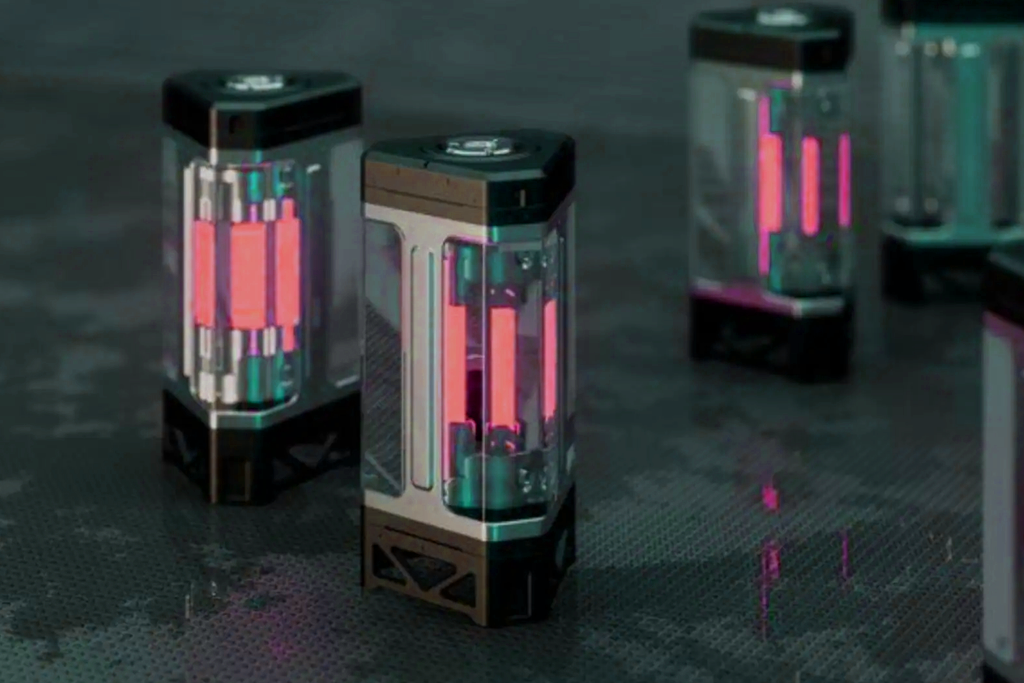
Scientists Build Working Quantum Battery Prototype
Australian scientists have achieved a breakthrough that could redefine energy storage as we know it—creating the world’s first working quantum battery prototype. The device, developed through collaboration between CSIRO, the University of Melbourne, and RMIT, operates on principles fundamentally different from conventional batteries, promising near-instantaneous charging times that sound like science fiction but are now scientific reality.
The quantum battery prototype, charged wirelessly using a laser, represents the closest step yet toward functional quantum energy storage—technology that exploits the strange rules of quantum physics to achieve charging speeds impossible with traditional chemistry-based batteries.
How Quantum Batteries Differ from Conventional Technology
Traditional batteries store energy through chemical reactions—electrons flow between materials in a controlled process that takes time and generates heat. Charging a lithium-ion battery involves forcing ions through a material lattice, a process limited by physical constraints that engineers have spent decades optimizing.
Quantum batteries operate on an entirely different principle. They exploit what physicists call “collective quantum effects,” where energy absorption happens simultaneously rather than sequentially. In a quantum battery, particles can occupy multiple states at once, allowing energy transfer to occur in parallel rather than step-by-step.
When charged with a laser, the quantum battery prototype demonstrated energy absorption rates far exceeding what classical physics would predict—achieving what researchers describe as “superabsorbing” behavior where the charging rate increases with device size rather than decreasing.
The Australian Breakthrough Explained
The collaborative team from CSIRO, University of Melbourne, and RMIT built a proof-of-concept device that can charge, store, and discharge energy using quantum mechanical principles. The key innovation lies in the battery’s ability to harness collective effects that emerge at the quantum scale.
In their study, the researchers demonstrated that the quantum battery’s charging time actually decreases as the device grows larger—a counterintuitive result that contradicts everything we know about conventional battery behavior. This “quantum advantage” suggests future quantum batteries could charge faster than smaller versions, unlike every battery technology that has ever existed.
The wireless charging mechanism using laser light provides a glimpse into how such devices might be charged in practice—light energy transferred directly into quantum states without the intermediate step of electrical current.
Potential Applications and Industry Impact
The implications of working quantum battery technology span multiple industries. Consumer electronics could see smartphones and laptops that charge in seconds rather than hours. Electric vehicles might replenish their batteries in minutes instead of the current 30-60 minute window for fast charging.
More transformative applications include grid-scale energy storage, where quantum batteries could enable rapid response to demand fluctuations, making renewable energy sources like solar and wind far more practical for baseload power supply.
Medical devices present another compelling application space. Implanted devices like pacemakers could potentially charge wirelessly and continuously from the body itself, eliminating the need for surgical battery replacements. Quantum effects could enable energy harvesting from biological environments where traditional batteries cannot operate effectively.
Challenges and Path to Commercialization
Despite the breakthrough, significant challenges remain before quantum batteries reach consumers. The prototype operates under laboratory conditions that are difficult to replicate at scale—extreme temperatures, specialized equipment, and extremely precise control over quantum states.
Maintaining quantum coherence—the delicate quantum states that enable the battery’s unique properties—remains the central engineering challenge. Classical physics describes objects in definite states, but quantum batteries require maintaining superposition and entanglement across many particles simultaneously, a condition extraordinarily sensitive to environmental disturbance.
Researchers estimate commercial quantum batteries remain 10-15 years away, though the prototype demonstration suggests the fundamental physics is sound. The path from laboratory to product requires solving manufacturing challenges, reducing costs, and developing reliable packaging that protects quantum states from decoherence.
What the Quantum Battery Breakthrough Means for Energy Technology
The successful demonstration validates decades of theoretical research into quantum energy storage. For the first time, scientists have shown that the exotic physics governing quantum batteries can be harnessed in a real device—not just in equations and computer simulations.
This breakthrough positions Australia as a leader in quantum technology development. The CSIRO-led collaboration represents a model for how academic institutions and government research organizations can combine resources to achieve transformative outcomes that neither sector could accomplish alone.
As energy demand continues growing globally, quantum batteries offer a potential paradigm shift—one that could eventually make today’s most advanced lithium-ion technology look as obsolete as lead-acid batteries do now.
Frequently Asked Questions
What is a quantum battery?
A quantum battery is an energy storage device that uses quantum mechanical principles—like superposition and collective effects—to achieve charging speeds impossible with traditional battery chemistry. The world’s first working prototype was demonstrated by Australian scientists in 2026.
How does the quantum battery prototype work?
The CSIRO prototype is charged wirelessly using a laser. It exploits quantum effects where energy absorption happens simultaneously across many particles rather than sequentially, enabling charging rates that increase with device size.
What makes quantum batteries different from lithium-ion batteries?
Conventional batteries store energy through chemical reactions limited by physical constraints. Quantum batteries use quantum superposition and collective effects to transfer energy in parallel, achieving dramatically faster charging times.
When will quantum batteries be commercially available?
Researchers estimate commercial quantum batteries remain 10-15 years away. Significant engineering challenges around maintaining quantum coherence at scale must be solved before mass production becomes feasible.