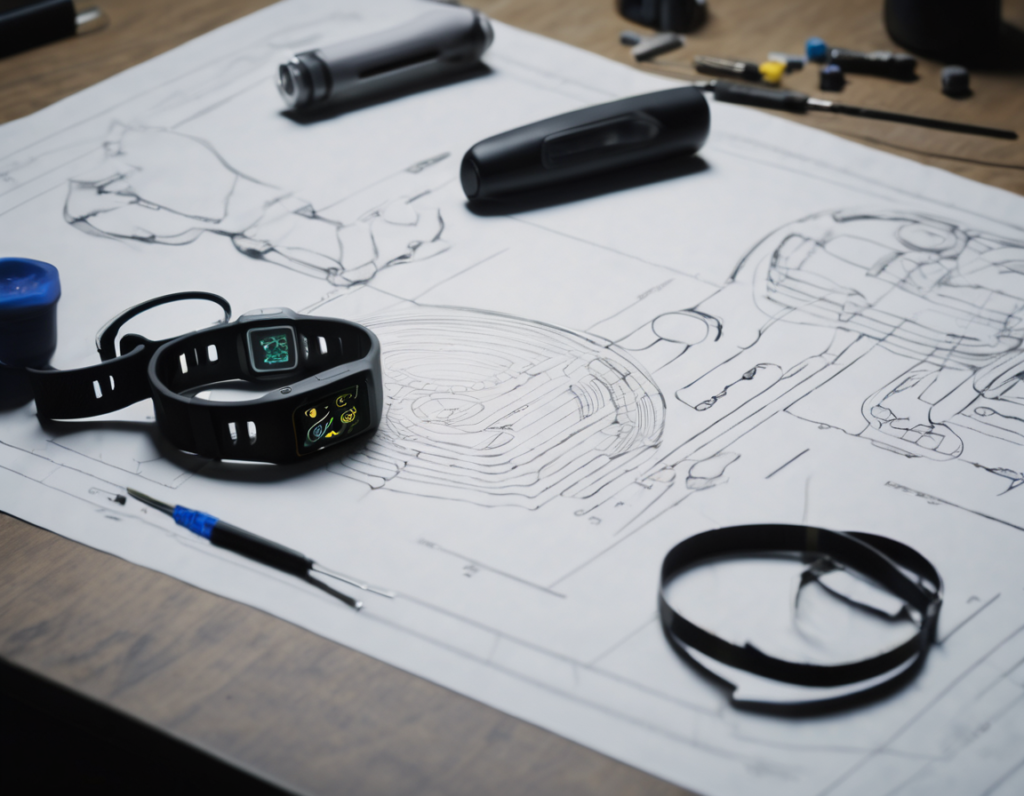
Google Has Released 2D CAD Drawings of the Fitbit Air The crypto and wearable tech worlds just got an unexpected crossover. Google has quietly released the official 2D CAD drawings of the Fitbit Air, and the community is already buzzing with speculation about what this means for the future of health data and tokenized fitness. For those unfamiliar, CAD drawings are the technical blueprints that reveal exact dimensions, sensor placements, and mechanical design of a device. Google’s decision to share these files openly is a bold move, especially for a product that blends fitness tracking with potential blockchain integration. The Fitbit Air has been rumored to support decentralized health data storage, and these drawings could be the first step toward an open-source hardware ecosystem. The drawings themselves show a sleek, minimalist band with a larger-than-expected sensor array. There are clear indicators for heart rate, SpO2, and a new biometric scanner that hasn’t been seen in previous Fitbit models. Crypto analysts are already speculating that this sensor could be used for secure identity verification or even as a wallet access point. The band also features a proprietary connector port, which might allow for future modules or crypto mining accessories. Why would Google release these blueprints? One theory is that they want third-party developers to build software and firmware that can interact with the device’s raw data. If the Fitbit Air is truly designed for Web3, then open hardware is essential. Without public access to the sensor layouts, developers cannot write secure code for decentralized apps that rely on personal health metrics. Another angle is the move toward verifiable data on the blockchain. In many crypto projects, you need to prove that your biometric data is real and not tampered with. By publishing the CAD files, Google allows hardware audits. Anyone can now verify that the physical device matches the specifications, making it harder for bad actors to spoof sensor readings. The timing is also interesting. As global regulations around digital identity and health data tighten, having a transparent hardware design could be a major advantage. The Fitbit Air might become a standard device for proof of health or proof of activity in various crypto ecosystems. Imagine earning tokens for daily steps, but with hardware that is fully auditable and open. Of course, not everyone is excited. Some privacy advocates worry that open CAD files could lead to counterfeits or hardware exploits. But for the crypto community, transparency has always been a core value. The Fitbit Air with its public blueprint might be the first wearable that truly aligns with that ethos. In summary, Google’s release of the Fitbit Air CAD drawings is more than just a technical document dump. It is a signal that hardware is being democratized for the decentralized age. Whether you are a builder, an investor, or a fitness fanatic, this is a development worth watching closely. The Fitbit Air could be the bridge between your daily jog and your digital wallet.