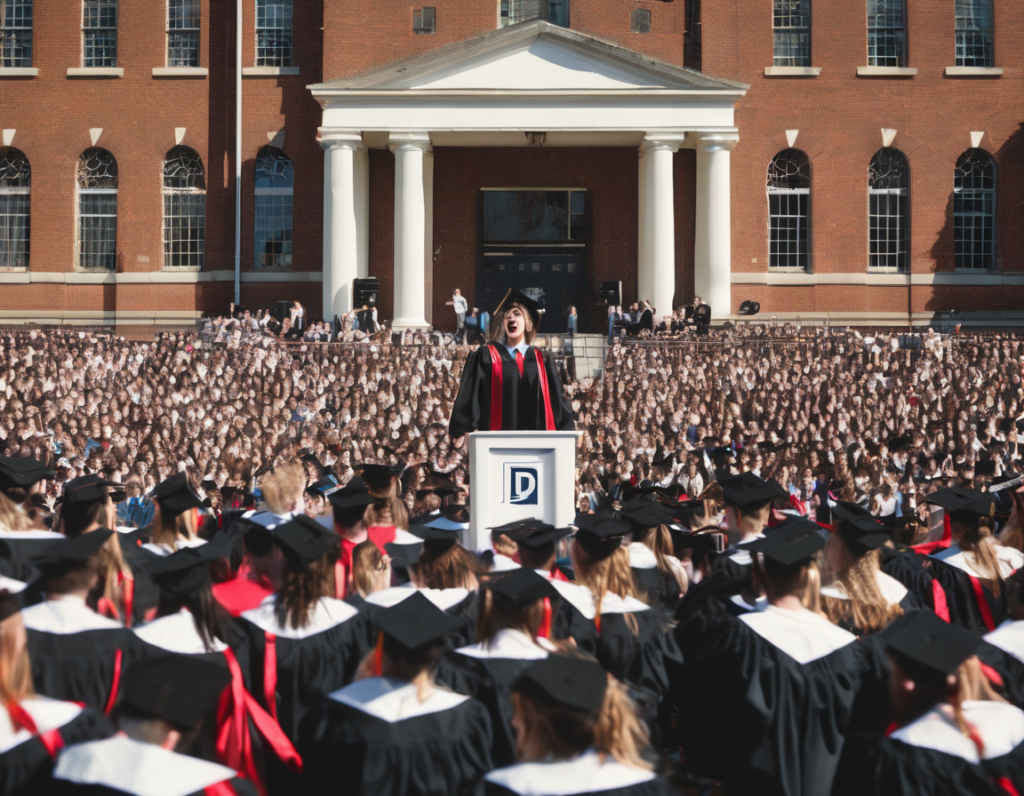
Harvard Graduation Speaker Tells Students: Your Mission Is to Destroy AI A graduation speaker at Harvard University lit up the stage with a fiery, profanity-laced rant against artificial intelligence, urging the graduating class to make destroying AI their generations defining mission. The speaker, comedian Ronny Chieng, did not hold back. He told the crowd of students and faculty that the technology posing the greatest threat to humanity was not climate change, nuclear war, or inequality. It was AI. He declared that the only way forward was to actively dismantle the systems being built by tech companies. Chiengs speech drew loud cheers from the audience. Many students stood and applauded as he called out the dangers of unchecked AI development. He framed the issue as a moral and existential imperative, arguing that the current trajectory would lead to job loss, loss of human agency, and a world controlled by algorithms. The speech struck a chord with a generation that has grown up alongside rapid technological change. From social media algorithms to generative AI tools like ChatGPT and image creators, many young people have watched as their careers, creativity, and privacy are increasingly shaped by forces they do not control. Chieng did not offer a detailed plan. Instead, he delivered a blunt message: the mission of this generation is not to adapt to AI or coexist with it, but to destroy it. He called for rebellion against the tech industrys push to replace human thinking with machine intelligence. The reaction online was split. Some praised the speech as a necessary wake up call. Others criticized it as misguided or overly dramatic. But the moment at Harvards graduation ceremony captured a growing sentiment among young people, who are questioning whether AI will truly serve them or undermine them. For crypto and blockchain advocates, the speech raises a familiar question: can decentralized technology offer an alternative to centralized AI systems? Many in the crypto space argue that blockchain based solutions can give users ownership, transparency, and control over their data, reducing dependence on the tech giants that dominate AI development. Whether or not Chiengs call to action will inspire real change remains uncertain. But one thing is clear: the debate over AI is no longer confined to boardrooms and tech conferences. It has arrived at the podium of one of the worlds most prestigious universities, and the students are listening.