
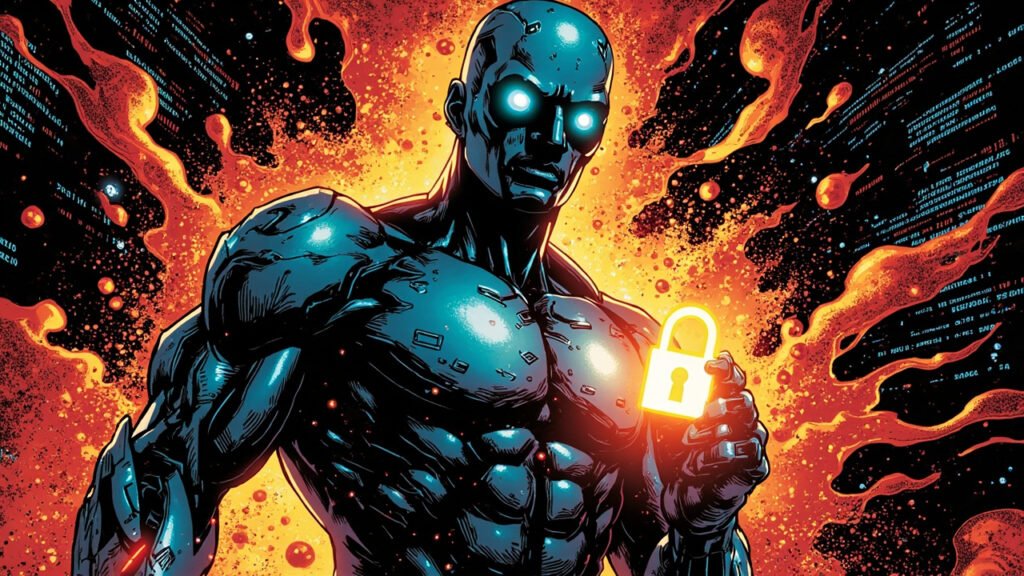
The U.S. government has cleared Anthropic to release its most powerful artificial intelligence model, called Mythos 5, to a limited set of “trusted” American organizations, ending a temporary block that had raised fresh concerns about the balance between AI safety and commercial competition. The decision, confirmed late Friday by the Department of Commerce, follows weeks of internal debate over whether the model’s raw capabilities in biology and chemistry made it too dangerous to ship without new export-style guardrails.
Anthropic’s Mythos 5 had been the focal point of a quiet dispute inside the Trump administration’s AI policy team since early June. Career officials at the Bureau of Industry and Security warned that the model could accelerate the discovery of pathogens and chemical weapons if released openly, a concern that several frontier labs echoed in private. Anthropic countered that Mythos 5 had been hardened against misuse through a combination of constitutional training, real-time misuse classifiers, and a new tiered-access program that gates the most capable weights behind a third-party review.
Under the agreement reached this week, Anthropic can deploy Mythos 5 to U.S. companies and government agencies that pass a vetting process run by a federally supervised review board. International customers and consumer-facing use cases remain restricted, a structure that resembles the tiered approach used for advanced semiconductors rather than a blanket export ban. The company said the framework would let it serve hospitals, energy operators, and defense research labs while keeping the model’s riskiest affordances inside a controlled perimeter.
Why the reversal matters
The reversal is the clearest signal yet that the administration is willing to differentiate between models whose main risks are bias or job displacement and models whose risks are physical. Officials familiar with the talks described the new policy as a “dual track” in which the most capable frontier systems are treated more like critical infrastructure than like ordinary software. Anthropic’s willingness to accept external oversight is being read inside the industry as a template that OpenAI, Google DeepMind, and xAI may soon be asked to follow.
Anthropic’s rival labs are watching closely. OpenAI has been negotiating a similar arrangement for its next-generation system, internally codenamed Horizon, which is also expected to exceed the capability thresholds that triggered the Mythos review. Google DeepMind is in early talks about a tiered rollout for its upcoming Gemini 3.5 release. If a workable review process emerges from the Mythos pilot, the three labs could enter the second half of 2026 with the most clearly defined deployment rules in the industry’s short history.
The vetting board in plain English
- Reviewers are drawn from NIST, the Department of Energy national labs, and accredited academic safety institutes.
- Approved “trusted” customers must disclose intended use cases and submit quarterly red-team results.
- Sandbox access, which lets outside researchers probe the model for dangerous capabilities, is mandatory for every approved deployment.
- Weights cannot be transferred to entities outside the United States without a separate Commerce license.
“The Mythos decision shows that the U.S. can be both the world’s leading AI developer and a responsible steward of dangerous capability. That’s the balance the next administration will inherit.” — A senior Commerce Department official familiar with the talks
What changes for enterprise buyers
For U.S. hospitals, utilities, and defense research labs, the practical effect is a fast path to Mythos 5 through a private endpoint with contractual safety obligations. Anthropic has already onboarded three large health systems and two regional grid operators under a pilot program that began last month, and those customers will be among the first to receive the unrestricted model. Pricing for the tiered version is expected to track the company’s existing enterprise contracts, with surcharges for the additional review and logging requirements.
Smaller developers and startups, however, will not see a material change. Mythos 5 will remain unavailable through Anthropic’s standard API and consumer products for the foreseeable future, and the company has not committed to a public release timeline. That asymmetry is likely to reignite a debate inside the AI policy community over whether tiered access entrenches the advantage of well-capitalized incumbents or simply channels the most powerful systems toward the uses that justify the risk.
Industry reaction and the road ahead
Investors reacted with cautious optimism. Shares of frontier model developers edged higher in pre-market trading, and several AI infrastructure companies rallied on the expectation that new safety review contracts will be awarded in the coming quarter. Civil society groups were more divided, with some welcoming the formal oversight and others warning that a federally supervised review board could become a single point of political failure if its membership shifts with each administration.
Anthropic’s leadership has framed the agreement as proof that self-regulation paired with government oversight can move faster than either approach alone. Whether that model holds will be tested in the next six months, as OpenAI and Google DeepMind negotiate their own arrangements and as the first round of Mythos deployments produces concrete data on misuse, performance, and economic impact. The administration’s bet is that the United States can stay ahead of Chinese competitors by being more deliberate rather than more permissive. The early evidence from the Mythos decision suggests that bet is now the official policy, with all the opportunity and all the risk that comes with it.