
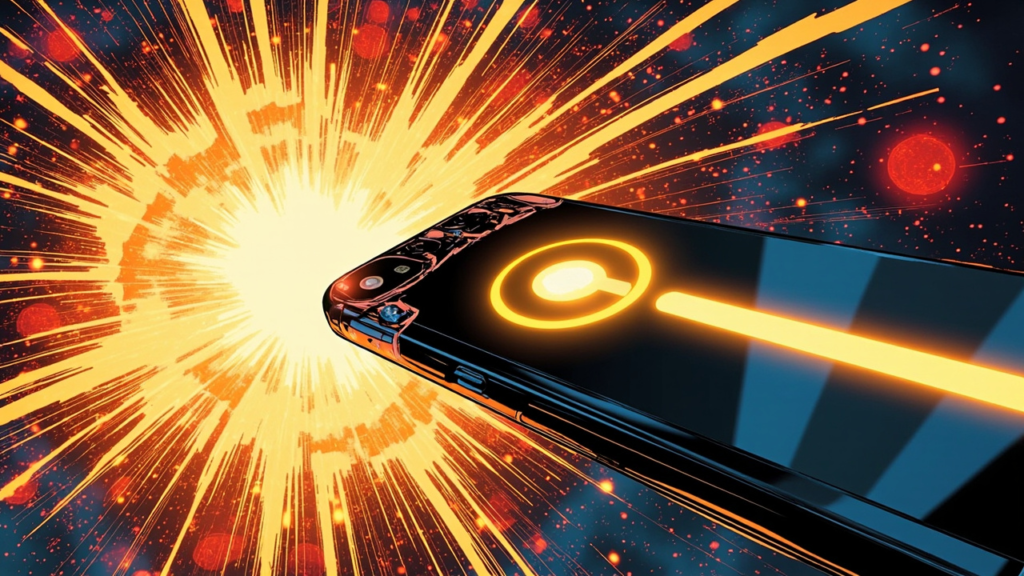
Google released the first official Pixel 11 teaser on July 15, 2026, locking in the August 12 Made by Google event and confirming two details that had been rumored but not nailed down: the device name and a previously unannounced hardware feature called Pixel Glow. The landing page on the Google Store is titled “The next generation. Google Pixel 11. August 12.” and the company has explicitly confirmed this year’s lineup carries the Pixel 11 name, ending weeks of speculation that Google might skip directly to Pixel 12.
The Pixel 11 Pro is shown in gold as the hero color of the teaser campaign, a notable shift from the more muted Obsidian, Porcelain, and Hazel palette of recent years. The full Google Store page leans heavily into the gold theme, signaling that gold is the marketing lead for the Pixel 11 generation the way Bay Blue was for the Pixel 8. Beyond the color story, the teaser confirms that Gemini Intelligence will be a headlining feature alongside the device lineup, framing the August event as a hardware-plus-AI announcement rather than a hardware launch that happens to ship with AI features.
Pixel Glow Is the Surprise
The most interesting detail in the teaser is not the gold color or the Pixel 11 confirmation. It is Pixel Glow, a circular light embedded in the camera bar that occupies the same physical space as the traditional flashlight. The light sits to the right of the lens cluster and can display a full range of colors. Based on the teaser footage, Pixel Glow appears to function as a status indicator that lights up during application or system events, including a Mac-style “Spinning Beach Ball of Death” signal when the OS or an application has crashed.
That makes Pixel Glow both a design signature and a practical diagnostic tool. The location in the camera bar is a deliberate design choice: the back of the phone is the side most often visible on a desk or in a stand, so a status indicator on the camera bar is one of the few positions on the device where it can be seen without lifting the phone. Google is signaling that Pixel Glow will be used for more than notifications, and the choice to make it customizable to a wide color range suggests it will be a programmable interface element that third-party apps can hook into.
What the Teaser Confirms
- Device name: Pixel 11 series, not a Pixel 12 leap.
- Hero color: Gold across Pixel 11 Pro marketing.
- Event date: August 12, 2026 at 6pm ET / 3pm PT.
- Headlining software: Gemini Intelligence alongside device lineup.
- Pre-orders: Open August 12, the day of the event.
- New hardware: Pixel Glow circular status light in the camera bar.
- Email subscriber promotion window: July 15 to August 7, 2026.
The Hardware Lineup and What to Expect
Based on leaks leading up to the teaser, the Pixel 11 family will include the Pixel 11, Pixel 11 Pro, and the Pixel 11 Pro Fold. All three are expected to run on Google’s second-generation Tensor G6 silicon, reportedly fabricated on a 2nm process and tuned heavily for on-device Gemini inference rather than raw compute benchmarks. A new Pixel Watch 5 is also expected to debut at the same event, completing a refresh of Google’s core hardware ecosystem.
Pricing has not been confirmed, but supply-chain reports point to a price increase across the lineup, with the Pixel 11 Pro expected to start in the $1,099 to $1,199 range. That would place the Pixel 11 Pro above the iPhone 18 base model but below the iPhone 18 Pro, continuing Google’s pattern of competing on camera capability and AI features rather than on headline specs. Apple’s iPhone 18 launch is expected in September, which gives Google roughly four weeks of Pixel 11 momentum before the next major smartphone cycle begins.
Why Pixel Glow Is a Bigger Story Than It Looks
Smartphone hardware has converged to the point that differentiation between flagship devices increasingly comes from the small details: the haptic motor, the fingerprint sensor, the camera bar. Google choosing to add a programmable, full-color status light to the back of the phone is a meaningful design departure from the matte uniformity that has dominated recent flagships. Pixel Glow gives the Pixel 11 a hardware feature that iPhone does not have, that Samsung does not have, and that any other Android OEM has to actively choose to copy.
“Tune in to Made By Google on August 12 at 6pm ET / 3pm PT to learn the latest news and updates, from Gemini Intelligence to the new lineup of Google Pixel devices.” (Google Store landing page, July 15, 2026)
The strategy makes sense in context. Google has spent two years positioning the Pixel line as the only Android flagship built around Gemini and the only phone where AI features are designed first rather than bolted on. Pixel Glow reinforces that positioning: a hardware element that exists specifically to surface AI activity and system status to the user. Whether developers embrace it as a programmable interface element will determine whether Pixel Glow becomes a durable Pixel feature or a one-generation experiment.
For now, the practical effect of the July 15 teaser is that Google has confirmed Pixel 11, set the August 12 event date, given Gemini Intelligence equal billing with the hardware, and revealed Pixel Glow as the hardware surprise. Pre-orders open the same day as the event for anyone who signs up for Google Store marketing emails by August 7. The full Pixel 11 launch is roughly four weeks away, and Google has given the industry a lot to talk about in the meantime.