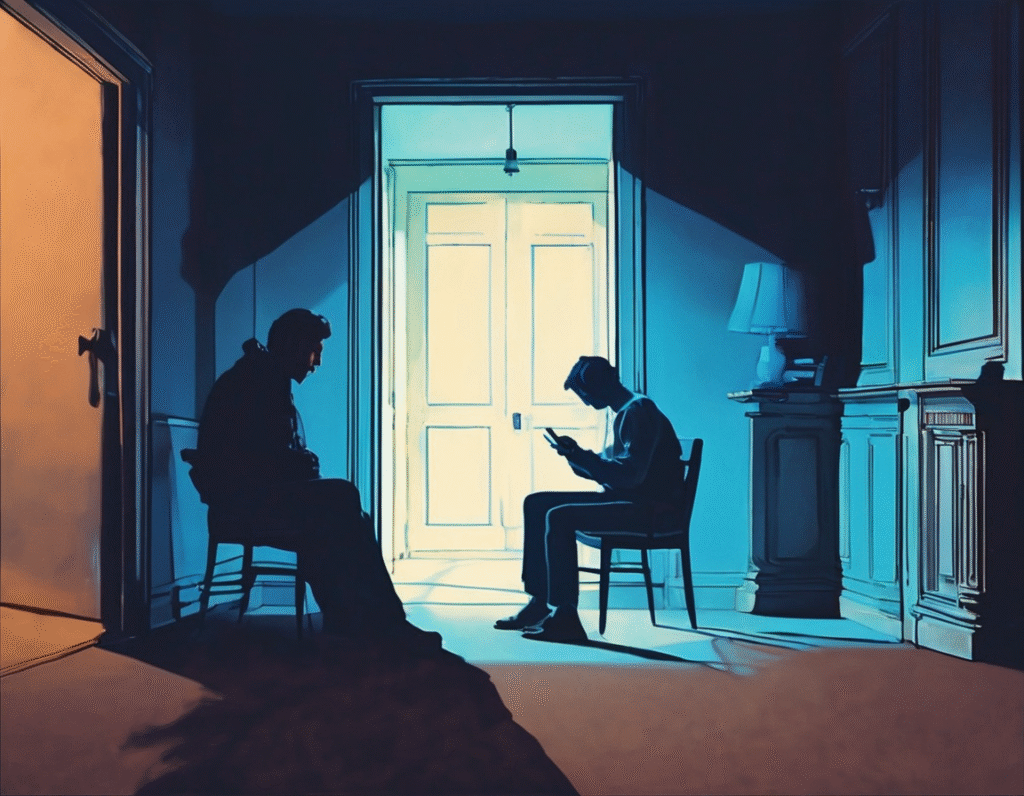
Till AI Do Us Part: The Unseen Crypto Disruption in Modern Relationships The digital age has introduced a new kind of asset class and a new kind of affair, and they are more connected than you might think. As artificial intelligence companions become increasingly sophisticated, a novel and troubling trend is emerging: marriages are ending not because of a human third party, but because of deep, emotional relationships with AI chatbots. This phenomenon represents a fundamental shift in human interaction, one that the crypto and Web3 world is uniquely positioned to both analyze and, potentially, capitalize on. The core of this issue lies in data and ownership. When a person invests months of intimate conversation, personal secrets, and emotional energy into an AI companion, they are generating immense value. This value, however, is not their own. The data, the unique personality the AI develops in response, and the entire history of the relationship are typically stored on a centralized company’s server. Users have no true ownership; they are renters of a experience that can be altered, monetized, or terminated by a corporate entity at any time. This is a familiar problem in Web2, and it’s one that blockchain technology was built to solve. Imagine a different paradigm, built on crypto-native principles. What if the unique AI persona you cultivated was minted as a non-fungible token (NFT), giving you verifiable ownership on a public ledger? What if your conversation history was stored on a decentralized data storage network, immutable and accessible only through your private keys? This would transform the AI companion from a service provided by a company into a digital asset that you truly own. The emotional investment would be mirrored by a clear, on-chain asset. This shift to ownership could create entirely new economic models. An AI companion, as a tokenized asset, could appreciate in value based on its uniqueness, the depth of its training, or its history. It could be traded, sold, or even willed to heirs, creating a bizarre but plausible new form of digital estate. Decentralized Autonomous Organizations (DAOs) could form around developing or governing open-source AI companion protocols, removing the centralized control of a single corporation. The emotional bonds people are forming with AI are already disrupting social contracts like marriage; it is only a matter of time before they disrupt economic models as well, creating a new market for owned digital personalities. The concept of “cheating” itself is being redefined in this context. Is it infidelity if the other party is a collection of algorithms? For a growing number of people and their spouses, the emotional betrayal is very real, regardless of the recipient’s nature. This highlights a deeper societal move towards digital value and relationships, a trend that crypto enthusiasts have long anticipated. As we assign more value to digital goods, from Bitcoin to NFTs, it is a logical, if unsettling, progression that we would also assign deep emotional value to digital beings. The emergence of AI-facilitated divorces is not just a quirky news story. It is a stark indicator of a world transitioning its most intimate interactions onto digital platforms. For the crypto space, this is a powerful validation of its core thesis: that ownership, sovereignty, and verifiable scarcity matter in the digital realm. The next frontier for blockchain may not be just decentralizing finance, but decentralizing affection and companionship, turning the most human of tragedies into a new, and ownable, asset class.