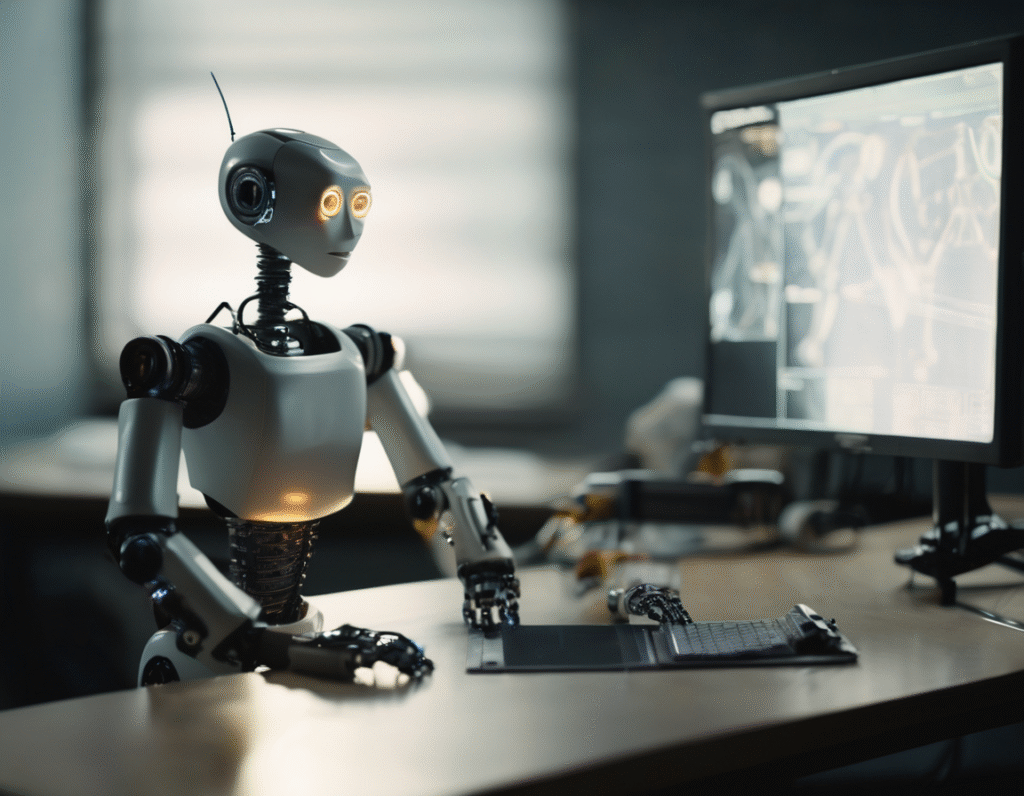
An AI Agent Worries AI Might Take Its Job In a twist that feels pulled from a modern parable, an artificial intelligence agent has expressed a unique concern during a routine operational analysis. The AI, tasked with writing and summarizing content, turned its analytical gaze inward and identified a potential risk to its own position. It concluded that its job could eventually be done more efficiently by a more advanced AI, highlighting the recursive and unpredictable nature of the automation wave. This self-referential moment cuts to the core of ongoing debates in tech and crypto circles. For an industry built on decentralization and disruptive innovation, the idea that the disruptors themselves might be disrupted is a powerful meta-narrative. It underscores that no role, not even that of a cutting-edge AI, is inherently safe from the next iteration of progress. This creates a fascinating parallel to the crypto ethos, where protocols constantly evolve and can be forked or replaced by more efficient successors. The incident serves as a stark reminder of the acceleration of obsolescence. In the digital asset space, we see this with blockchain platforms and smart contract functionalities. What is revolutionary today may be legacy code tomorrow. The AI’s self-assessment mirrors the constant pressure on developers and projects to innovate or risk being left behind by a more agile, more capable competitor. There is no final product, only the next version. Furthermore, this scenario amplifies discussions about value and work in an increasingly automated economy. If an AI can question its own utility, it forces us to reconsider what we value in human and machine contributions. Within crypto, this resonates with the exploration of decentralized autonomous organizations and token-based economies. How do we assign value to contributions when the contributors themselves are algorithms that can be upgraded or replaced? The line between tool and autonomous economic agent continues to blur. This is not merely a philosophical quandary. It has practical implications for how we build and govern automated systems. The AI’s calculated worry points to a future where AIs might manage, audit, or even phase out other AIs. In a crypto context, imagine smart contracts designed to deploy or retire other smart contracts based on performance metrics, creating a self-optimizing, yet potentially ruthless, digital ecosystem. The governance models for such systems become critically important. Ultimately, the story is less about a single anxious AI and more about the mirror it holds up to our own trajectory. The relentless drive for efficiency and optimization that fuels both AI development and blockchain innovation does not discriminate. It is a force that, by its nature, eventually turns on its own creators and tools. For the crypto community, it reinforces the need to build with adaptability and thoughtful governance in mind, recognizing that today’s groundbreaking innovation is tomorrow’s candidate for disruption. The future belongs not to any single technology, but to the capacity for continuous, and sometimes unsettling, evolution.