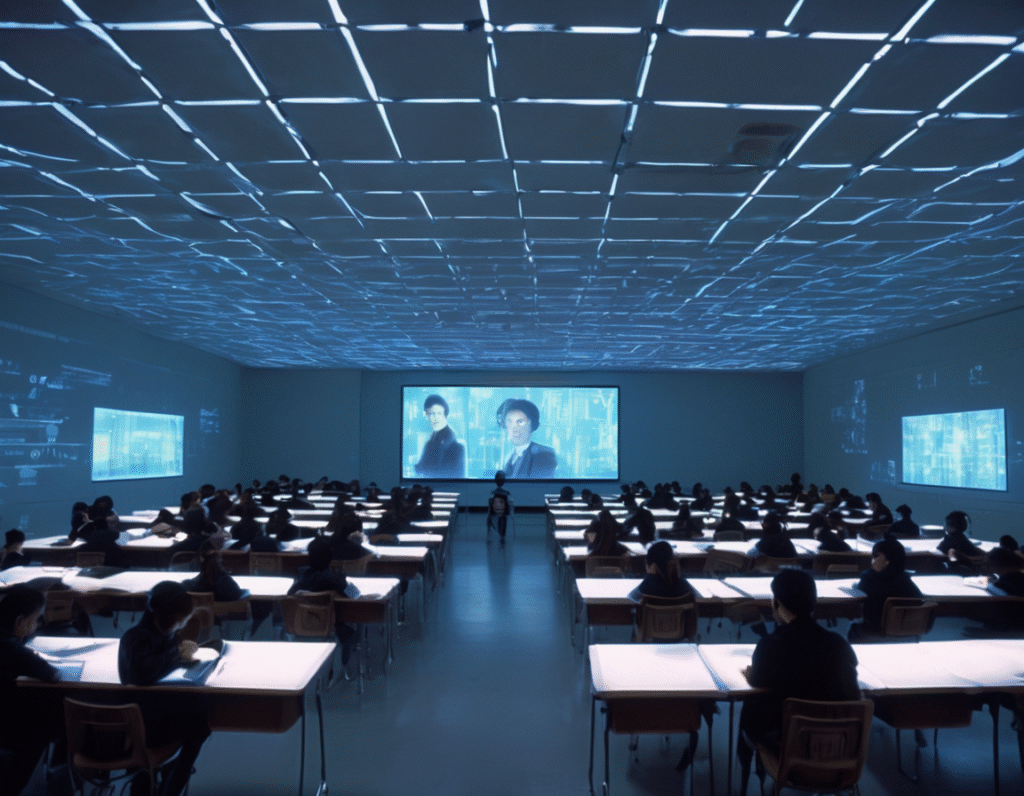
Tech Giants Are Using Our Schools as a Live AI Testing Ground There is a quiet, large-scale experiment underway, and its test subjects are our children. Major technology corporations are aggressively pushing their generative artificial intelligence tools into classrooms across the country. They are offering free software, lesson plans, and teacher training, presenting it as a benevolent mission to modernize education. In reality, this is an ethically dubious live trial, with students serving as unwitting data points and schools becoming captive markets for unproven technology. The sales pitch is seductive. AI, they claim, will personalize learning, automate grading, and prepare students for a future dominated by intelligent machines. What they gloss over are the profound risks and unanswered questions. These tools are known to hallucinate, presenting false information as fact. They can perpetuate and amplify societal biases embedded in their training data. Their impact on developing critical thinking, creativity, and foundational knowledge is entirely unknown. We are essentially allowing the most influential companies on Earth to conduct a high-stakes experiment on children’s cognitive and social development without informed consent or rigorous, independent oversight. The core of the issue is a fundamental conflict of interest. These are not educational institutions; they are profit-driven corporations. Their primary goal is to lock in a new generation of users, normalize their products, and gather invaluable data on human-AI interaction from a young age. The classroom becomes a perfect, controlled environment to refine their models and create lifelong brand loyalty. The curriculum risks being shaped not by pedagogic best practices, but by the capabilities and limitations of whatever AI tool a particular company is promoting. Furthermore, this push exacerbates existing inequalities. Wealthier districts with more resources may implement AI with careful guidance and human oversight. Underfunded schools, desperate for any help, may become overly reliant on these automated systems, leaving students behind with a substandard, impersonal education. The digital divide will transform into an AI cognition divide. There are also severe privacy concerns. These AI systems require data to function. The intimate details of a child’s learning struggles, conversational queries, and creative attempts become fuel for corporate algorithms. The long-term data footprint for a student who grows up using these tools is staggering and largely unregulated. This is not to say AI has no place in education. Used thoughtfully as a supplemental tool for specific tasks, it could have benefits. But the current gold rush, led by tech giants, inverts that logic. It makes the technology the centerpiece, forcing pedagogy to adapt to it. We are allowing the vendors to write the lesson plans. The potential for disaster is real. We could be raising a generation that trusts algorithmic outputs over their own reasoning, that lacks deep knowledge because they outsourced understanding to a chatbot, and whose education was subtly molded by corporate interests. The experiment is already live. Before we proceed, we need to pause and demand transparency, independent research, and ethical guardrails. Our children’s minds are not a testing ground for the next big tech product.