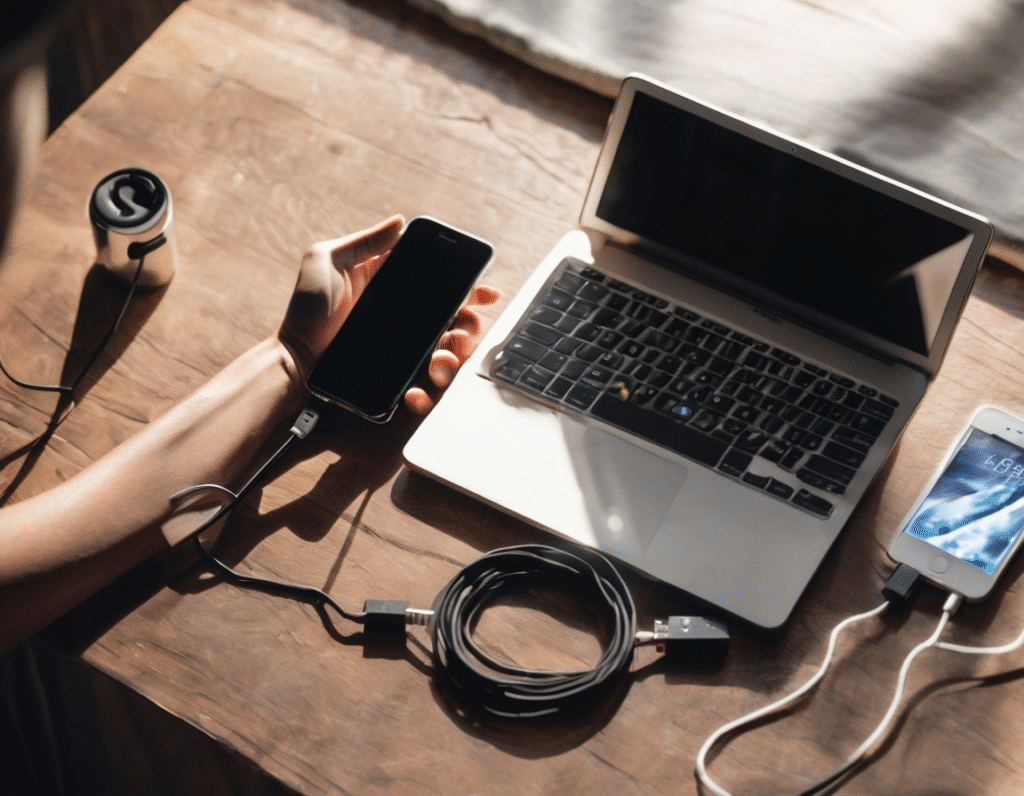
Finding the best power bank means balancing capacity, speed, and portability. After testing dozens of models from brands like Anker, Belkin, UGreen, and others, a clear winner emerges for those who need to charge anything: the Anker 25kmAh Laptop Power Bank. It features two built-in USB-C cables, massive capacity, and super-fast charging speeds. But it’s not the only option. Here are the top power banks for 2026 and what you need to know to choose one. What to Look for in a Portable Battery Pack Battery Type and Safety Nearly all power banks use lithium-ion batteries due to their excellent energy density. While safe, they must be handled with care, especially when flying. The TSA allows external batteries rated at 100 watt-hours or less in carry-on luggage only. Recently, Southwest Airlines required that power banks in use be kept in clear view, not stored away, due to fire risk. Capacity Explained Capacity is listed in milliamp hours (mAh). A small 5,000mAh bank can give a phone a solid boost, while larger banks over 25,000mAh can recharge laptops or phones multiple times. However, you never get the full rated capacity due to energy loss from heat and voltage conversion. On average, expect about 60 percent efficiency. For example, a 10,000mAh bank delivers roughly 5,800mAh of actual charge to your device. The Wireless Charging Shift Wireless charging is less efficient than wired but offers great convenience. The introduction of the Qi2 standard has been a game-changer, supporting speeds up to 15W and including magnetic attachment for iPhones (MagSafe) and now Google Pixel 10 phones (Pixelsnap). The latest Qi2 25W standard is supported by new iPhone 17 models and the Google Pixel 10 Pro XL, with compatible banks like the Ugreen MagFlow now available. Ports and Power USB-C ports are now standard and deliver faster charging than older USB-A ports. Pay close attention to the wattage rating printed next to each port. A phone can charge from a high-wattage port, but a laptop requires a more powerful connection, typically 65W or 100W. The cable must also support that wattage. Many of the best banks now include a built-in USB-C cable, ensuring you always have the right cord. Design and Extra Features Power banks now come in various colors and designs. Useful extras include MagSafe compatibility, built-in wall plugs, kickstands, and clear battery indicators, with some models featuring precise LED percentage displays. How We Test Our testing involves charging devices like iPhones, Android phones, iPads, and MacBooks from near zero to full using each power bank. We continuously update our testing with new devices and newly released power banks to ensure our recommendations are current. Other Noteworthy Power Banks While not our top picks, some power banks offer unique features. The Belkin Stage PowerGrip is a 9,300mAh bank that doubles as a Bluetooth camera shutter and phone grip, perfect for mobile photographers. The Anker MagGo for Apple Watch power bank combines a 10,000mAh capacity with a built-in USB-C cable and a pop-up Apple Watch charger, a lifesaver for watch owners. The HyperJuice 245W is a sleek, powerful 27,000mAh bank with four USB-C ports, but it is similarly priced to our top laptop picks which offer more port variety or built-in cables. The EcoFlow Rapid magnetic power bank is a nice-looking 5,000mAh Qi2 option with a pull-out stand, but it was outperformed by our top MagSafe pick. The well-built Mophie Snap+ Powerstation Mini has a great stand but only a 5,000mAh capacity, making it less versatile than our top choice. Power Bank FAQs What’s the difference between a power bank and a portable charger? These terms are interchangeable. They refer to a lithium-ion battery used to recharge devices like phones, tablets, and laptops. Pay attention to capacity (mAh), size, and weight. This is different from larger “power stations,” which are too big for air travel. Does fast charging ruin your battery? Heat is the main enemy of battery longevity. Fast charging generates more heat, but modern phones have built-in safeguards like heat shields and software to manage temperatures. While fast charging might have a minimal long-term effect, the difference is negligible for most users thanks to these protections. The key is to avoid exposing your device to high heat in general. Can you use a power bank for all your devices? It depends on the bank’s capacity and your device’s needs. A small bank cannot charge a laptop, but a 20,000mAh or larger bank can. Port compatibility is also crucial. Devices with USB ports are easy to connect. Devices with unique ports like DC or those needing an AC plug require a power bank with those specific outputs, which are found in larger laptop-focused models.