
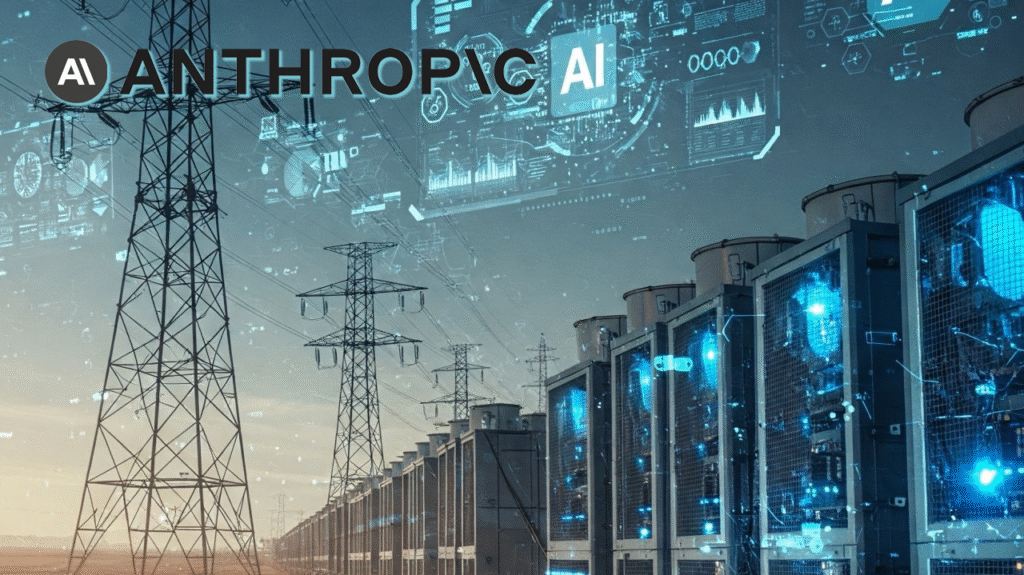
Anthropic, the artificial intelligence company behind the Claude chatbot, has announced a groundbreaking commitment to cover electricity costs and grid upgrades for data centers powering its AI systems. This move comes as energy consumption by artificial intelligence infrastructure becomes an increasingly contentious issue.
The announcement represents one of the first times an AI company has taken direct responsibility for the energy infrastructure required to operate its systems at scale. As AI models grow larger and more computationally intensive, the electricity demands of data centers have become a significant concern for both environmental advocates and grid operators.
Anthropic’s commitment signals a growing awareness within the AI industry of its responsibility for the broader infrastructure needed to support advanced computing. The company joins a small but growing number of tech firms taking proactive steps to address the environmental and logistical challenges of AI deployment.
The energy consumption of AI systems has drawn increasing scrutiny from regulators, environmental groups, and local communities concerned about the carbon footprint of large-scale computing. Data centers require not just electricity but also significant cooling infrastructure and reliable power supplies, often necessitating upgrades to local electrical grids.
By offering to cover these costs, Anthropic is attempting to address concerns about the burden AI infrastructure places on communities hosting data centers. This approach could set a precedent for how AI companies engage with the practical realities of scaling their systems.
The commitment comes at a time when AI companies are racing to deploy ever-larger models and expand their global infrastructure. Competition for data center capacity and electricity resources is intensifying, with major cloud providers and AI companies competing for access to power supplies and network connectivity.
Industry analysts view Anthropic’s announcement as a strategic move to differentiate itself in a crowded AI market while addressing legitimate concerns about the industry’s environmental impact. Whether competitors will follow suit remains to be seen, but the pressure on AI companies to demonstrate environmental responsibility is only increasing.
The move also reflects the growing recognition that AI infrastructure is becoming a significant component of national and regional energy planning. As AI adoption accelerates across industries, the sector’s demand for reliable, sustainable power will only grow.