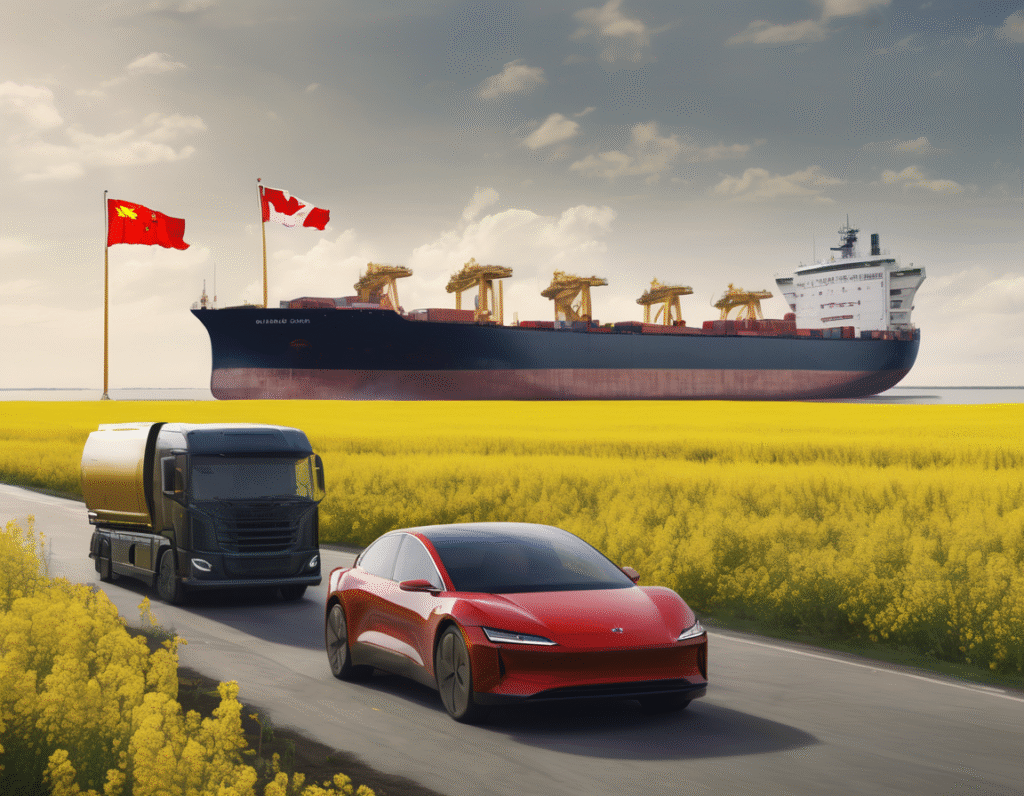
Canada Slashes Tariffs on Chinese Electric Vehicles in New Trade Deal In a significant shift in trade policy, Canada has agreed to drastically reduce its import tariffs on Chinese electric vehicles. The rate will drop from 100 percent to 6.1 percent as part of a new preliminary agreement between the two nations. In a reciprocal move, China will reduce its tariffs on Canadian canola seeds from 84 percent to approximately 15 percent. This decision marks a clear divergence from the United States, which maintains a 100 percent tariff on Chinese EVs, effectively blocking their entry. Mexico also imposes a higher 50 percent tariff on these vehicles. The three North American trading partners had previously been aligned in efforts to shield their domestic electric vehicle manufacturing sectors from international competition. Under the terms of the deal, Canada will permit an initial quota of up to 49,000 Chinese electric vehicles into the country. This allowance is set to increase to 70,000 vehicles after a period of five years. Chinese EV manufacturers, which benefit from substantial state support, are often able to price their vehicles significantly lower than domestic alternatives, presenting a potential value proposition for consumers. Canadian Prime Minister Mark Carney described the agreement as preliminary and highlighted an improvement in bilateral relations. He stated that the relationship with China has become more predictable in recent months and is now yielding tangible results. This warming of ties is viewed by analysts as a strategic response to the increasingly protectionist trade policies of the Trump administration. China appears to be seeking stronger economic partnerships with nations that may feel alienated by U.S. policies. When addressing concerns that an influx of cheaper Chinese electric vehicles could harm the Canadian auto industry, Prime Minister Carney expressed little worry. He pointed out that the agreed import quota represents a very small fraction of the total Canadian automotive market. Canadians purchase approximately 1.8 million vehicles annually, making the initial Chinese EV import allowance a low, single-digit proportion of total sales. China continues to hold its position as Canada’s second-largest trading partner, following the United States. The deal underscores a recalibration of international trade alliances and the complex dynamics of the global electric vehicle market, where competitive pricing and geopolitical strategy are increasingly intertwined.