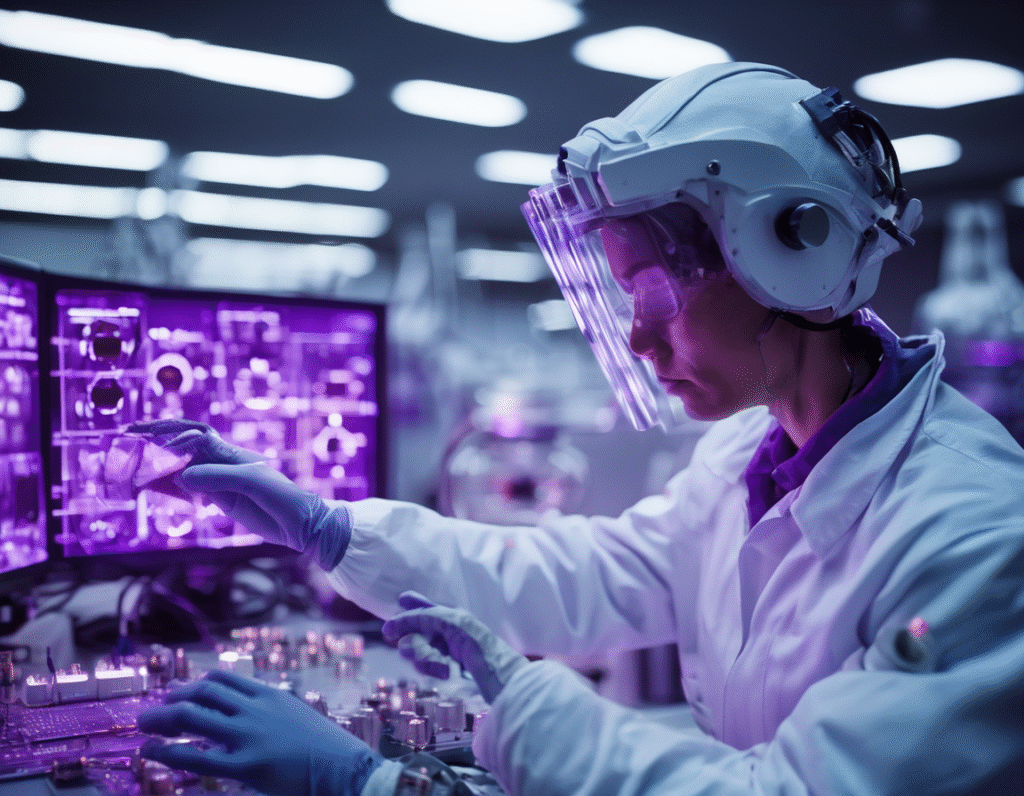
China is reportedly making a major breakthrough in its quest for semiconductor independence. According to a recent report, scientists in China have built a working prototype of an extreme ultraviolet lithography machine, a critical piece of technology for manufacturing the most advanced chips needed to power artificial intelligence. The prototype was completed earlier this year by a team in Shenzhen and is now undergoing testing. Notably, the project is said to involve former engineers from ASML, the Dutch company that is the world’s sole producer of commercial EUV machines. While this prototype is not yet producing chips, it is reportedly capable of generating the extreme ultraviolet light required for the process. This development, if confirmed, represents a significant acceleration in China’s technological roadmap. The ability to produce EUV machines domestically has been a central goal for Beijing, driven by President Xi Jinping’s prioritization of semiconductor self-sufficiency. The ultimate aim is to create a complete, domestic supply chain for advanced chips, free from foreign dependencies. EUV lithography is an extraordinarily complex and precise technology, essential for etching the microscopic circuits of cutting-edge semiconductors. It is the cornerstone of production for industry leaders like TSMC and Intel. Western nations, led by the United States, have used strict export controls on these machines as a key tool to limit China’s progress in advanced chipmaking, making domestic capability a strategic imperative. The report suggests China is targeting the start of its own EUV chip production by 2028, though some external analysts believe 2030 is a more realistic timeline. Regardless of the exact date, a successful prototype indicates China is potentially closing the gap faster than many outside observers had anticipated. This progress could reshape the global technology landscape. Achieving true semiconductor independence would not only bolster China’s AI and high-tech industries but also significantly alter the dynamics of international trade and geopolitical leverage, reducing the impact of foreign sanctions and export restrictions. The race for technological supremacy in the foundational field of chip manufacturing is intensifying.