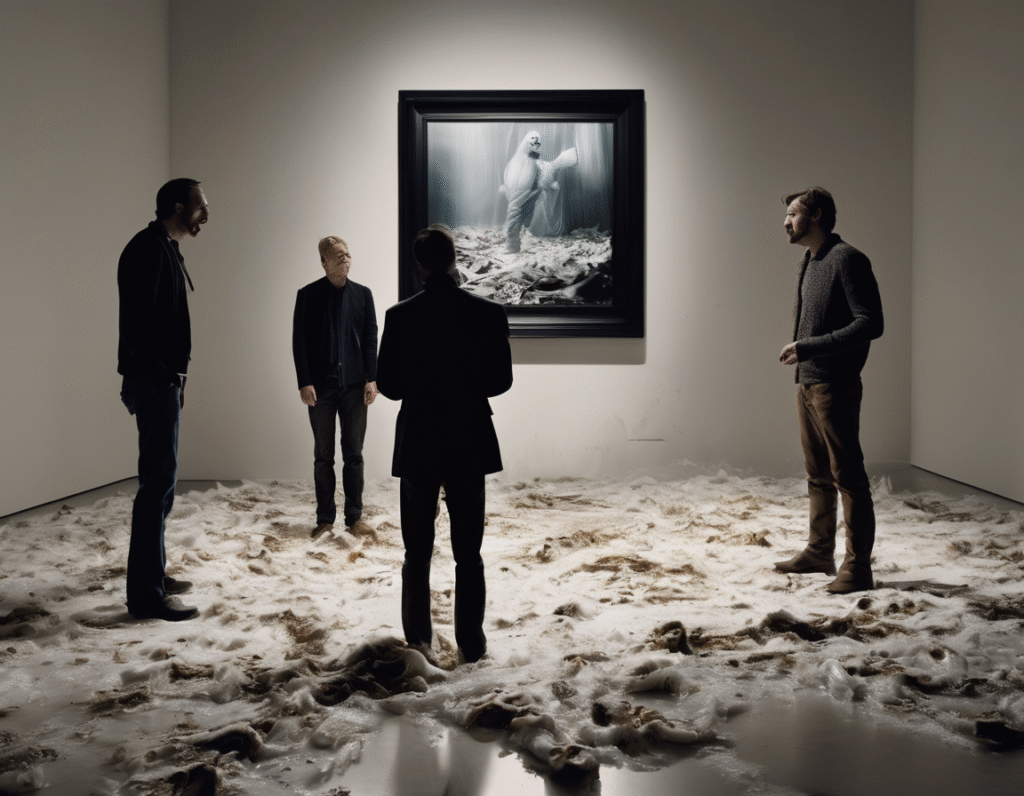
A man recently made headlines by destroying an AI generated art exhibit using only his teeth. The act was a visceral protest against the growing presence of artificial intelligence in creative fields, raising sharp questions about authenticity and value in the age of algorithmic generation. The exhibit featured prints created using artificial intelligence. The man, identifying himself as an artist, entered the gallery and proceeded to chew and tear the displayed pieces. He explained his actions as a statement against art that lacks human touch, claiming it diminishes the very essence of artistic creation. For him, art requires the struggle, intention, and lived experience of a human creator, elements he believes AI cannot replicate. His core argument is that art loses its substance when it is not made by the artist themselves. He views AI generated work as inherently derivative, assembled from existing data without genuine emotion or consciousness. The physical act of shredding the prints with his teeth was a deliberate metaphor, aiming to show that such work, in his view, holds no lasting value and can be literally consumed and destroyed. This incident taps directly into ongoing, heated debates within creative and crypto communities. In the world of NFTs and digital ownership, the provenance and originality of a work are paramount. The blockchain certifies ownership and a unique digital signature, but it does not automatically certify the human effort behind the creation. This event forces a difficult question: what are we actually buying and valuing? Proponents of AI art argue that the tool is just that a tool, and the curator or prompter provides the creative vision. They see it as a new medium, similar to the advent of photography or digital painting, which also faced initial skepticism. The backlash, however, underscores a deep seated fear of obsolescence and a devaluation of traditional skill. When algorithms can produce aesthetically pleasing images in seconds, what happens to the years of practice and personal expression? For crypto artists and collectors, this highlights a critical tension. The space champions innovation and new forms of expression, yet it also heavily trades on the narrative of the creator. The authenticity of the creative process itself can become part of an asset’s value. An AI generated NFT and a hand drawn digital NFT may exist on the same blockchain, but the market may judge them by completely different standards rooted in human effort. The man’s drastic performance is unlikely to stop the advancement of AI in art. However, it starkly frames a conversation that is essential for the future of creative industries and the digital asset markets built around them. It challenges communities to define what authenticity means in a post human creation landscape and what, ultimately, they are willing to value and preserve. The teeth marks left on those prints are a physical reminder that not all disruption is welcome, and the path to integrating new technology will be met with raw, human resistance.