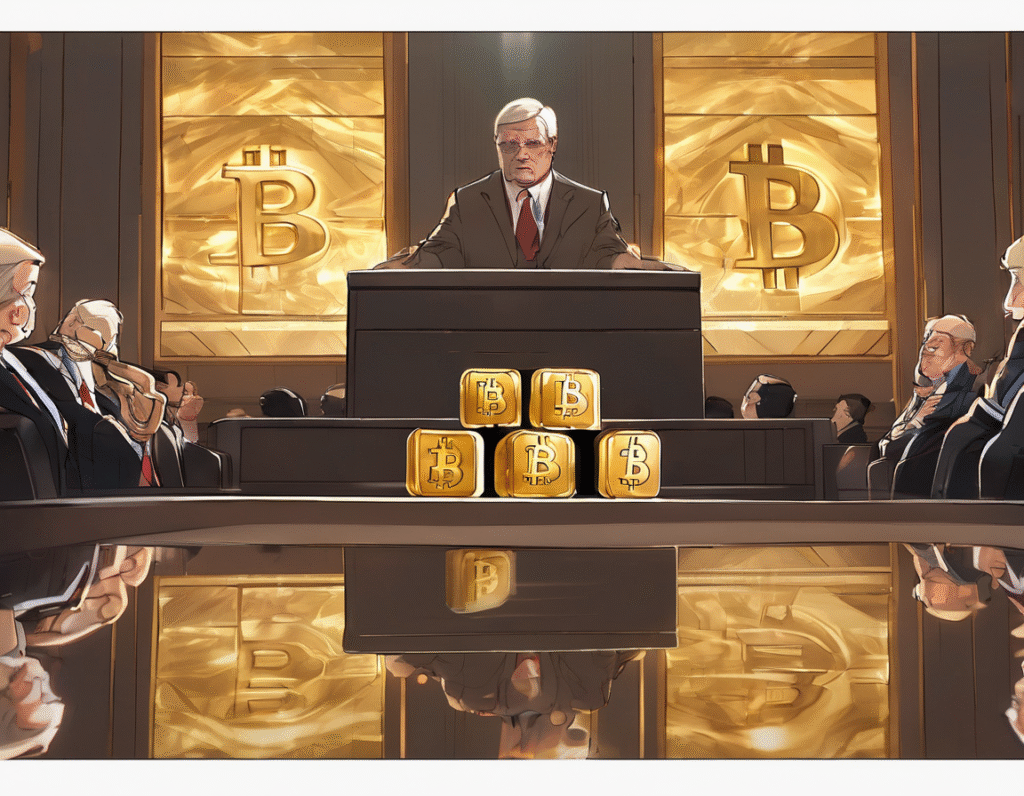
Trump Selects Crypto-Friendly Kevin Warsh for Fed Chair, Sparking Political Battle In a move that sent immediate ripples through both traditional finance and cryptocurrency markets, former President Donald Trump announced his intention to nominate Kevin Warsh, a former Federal Reserve Governor, to replace Jerome Powell as Chair of the Federal Reserve. This decision sets the stage for a contentious Senate confirmation process, highlighting the growing intersection of monetary policy and digital asset innovation. Kevin Warsh, who served as a Fed Governor from 2006 to 2011, is viewed by many within the crypto industry as a potentially sympathetic figure. His public statements and writings have demonstrated a forward-looking approach to financial innovation, including digital currencies. Unlike some traditional policymakers who view crypto with outright skepticism, Warsh has acknowledged the transformative potential of blockchain technology and digital assets, while still cautioning about risks. His perspective is seen as a balance between fostering innovation and maintaining financial stability, a stance that resonates with advocates seeking clearer regulatory frameworks. The nomination is fundamentally a political maneuver, representing a stark divergence from the current leadership. Jerome Powell, initially appointed by Trump and later renominated by President Biden, has presided over a period of aggressive monetary tightening to combat inflation. While the Powell-led Fed has begun researching a digital dollar, its pace and public stance have often been criticized by the crypto sector as too slow and overly cautious. Replacing him with Warsh signals a potential shift towards a more innovation-friendly regulatory posture at the highest levels of central banking. However, the path to confirmation is fraught with challenges. The Senate must approve the nomination, and the political climate guarantees a fierce battle. Democrats are likely to scrutinize Warsh’s past on Wall Street, his role during the 2008 financial crisis, and his policy views which may align with a more hawkish, less interventionist Fed. Republicans will also engage in deep debate, weighing his credentials against their own economic priorities. The hearing process will inevitably become a referendum on the Fed’s recent policy decisions, its independence, and its future role in a digitizing financial world. The immediate reaction from cryptocurrency markets was one of cautious optimism. The price of Bitcoin and other major digital assets saw a noticeable uptick following the news, reflecting market sentiment that views Warsh as a less adversarial figure for the space. Industry leaders expressed hope that his leadership could lead to more pragmatic regulations that protect consumers without stifling technological progress. The potential for a more structured dialogue between the Fed and the crypto industry is seen as a positive development. Yet, significant uncertainty remains. A Fed Chair operates within a complex system of governors and must respond to broader economic data. While Warsh’s personal views may be favorable, his primary mandate would still be controlling inflation and ensuring employment, not promoting cryptocurrency. Furthermore, the Senate fight could be prolonged, leaving a cloud of uncertainty over the Fed’s leadership for months. Ultimately, this nomination underscores a critical evolution. Digital asset policy is no longer a niche concern but a factor in high-stakes appointments at the very center of global finance. The choice of Kevin Warsh highlights how cryptocurrency innovation is increasingly influencing political and economic decision-making. Whether he is confirmed or not, the debate itself marks a milestone, signaling that the future of money is now a central topic in the halls of power. The coming Senate battle will not just decide a personnel appointment, but will also shape the tone of America’s engagement with the next generation of financial technology.