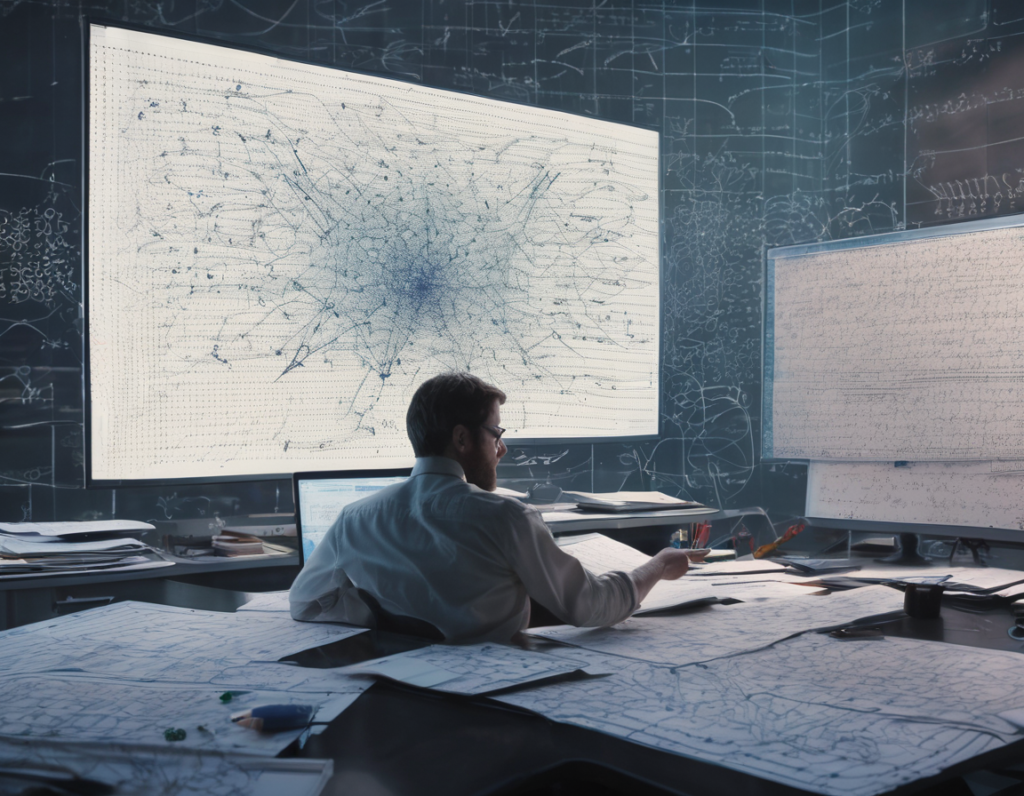
Mathematicians Claim Major Discovery Using ChatGPT A group of mathematicians says they have made a breakthrough in number theory with an unlikely assistant: ChatGPT. The researchers, who have not been named in the report, claim the AI chatbot helped them uncover a new way to think about large numbers and their structure, which they call the anatomy of numbers. The discovery centers on a fresh perspective for understanding how massive numbers are built from smaller components, similar to how a body has organs. The team says this approach could lead to new insights in cryptography, data security, and pure mathematics, where large prime numbers are essential. The mathematicians used ChatGPT to generate and test hypotheses at a pace far beyond human capability. The AI suggested patterns and relationships between numbers that the researchers had not considered, then helped verify them through mathematical proofs. One researcher described the process as having a tireless collaborator who never gets bored or tired of running calculations. Critics warn that AI is prone to errors and hallucinations, where it invents false facts or faulty logic. The mathematicians acknowledge this risk and say they double-checked every result using traditional methods. Still, they argue that the speed of discovery would have been impossible without the AI. The claim has sparked debate in academic circles. Some experts see it as a sign that AI will become a standard tool for theoretical mathematics, while others caution against overhyping the results. The team plans to publish their full findings in a peer-reviewed journal. If confirmed, this would be one of the first instances of a large language model making a verifiable contribution to pure mathematics. For now, the crypto and tech communities are watching closely, as any new insight into large number anatomy could have implications for encryption algorithms that rely on the difficulty of factoring huge numbers. The mathematicians concluded that AI is not replacing human intuition but amplifying it. They now believe that in the near future, every mathematician will work alongside AI assistants, much like how scientists use supercomputers today.