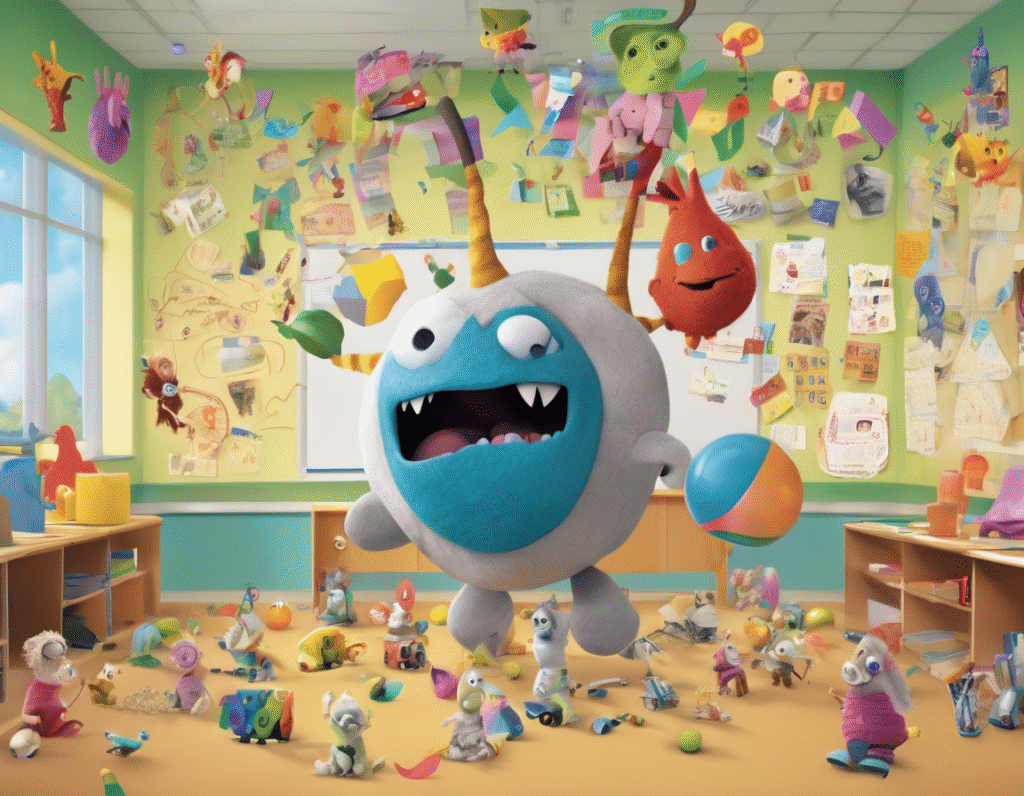
Chatgpt Fails at the Alphabet, Highlighting Ais Persistent Growing Pains A simple request to generate an alphabet poster for preschoolers should be a trivial task for a cutting-edge large language model. Yet, when prompted, the latest iteration of ChatGPT reportedly produced a bizarre and unusable result, flailing wildly with incoherent letters and nonsensical instructions. This seemingly minor failure is a stark reminder that even the most hyped artificial intelligence systems remain fundamentally unstable and resource-hungry beasts, constantly demanding more capital expenditure, or capex, to mask their core deficiencies. The task was straightforward: create an educational poster with each letter of the alphabet paired with a corresponding animal. Instead of a clean A for Alligator or B for Bear, the model output a chaotic jumble. It inserted random symbols and garbled characters resembling letters, suggested animals that do not exist, and provided instructions for printing that were physically impossible, like folding a single sheet of paper into a non-existent shape. The output was not just wrong; it was creatively broken, highlighting a lack of basic logical consistency. This incident cuts through the common narrative of AI as an infallible oracle. It demonstrates that these models, for all their impressive fluency, are not built on a foundation of structured reasoning or factual knowledge. They are statistical engines predicting the next most likely token, a process that can spectacularly derail on simple, constrained tasks requiring precise accuracy. The model can write a compelling sonnet about a blockchain but cannot reliably list 26 animals in order. Industry observers quickly pointed to the core issue with a dry, insider quip: Still needs more capex. This phrase encapsulates the current arms race in artificial intelligence. The prevailing solution to every AI shortcoming—hallucinations, instability, high compute costs—is to throw more money at the problem. More money for bigger servers, more expensive chips, and larger training runs with exponentially more data. The goal is to brute-force coherence through scale, hoping that enough computational power will eventually paper over the architectural cracks. For the crypto and web3 community, this is a familiar and cautionary pattern. It mirrors the early days of blockchain networks that prioritized sheer throughput and scale above all else, often at the expense of decentralization, security, or usability. The AI sector is now locked in its own version of this scaling trilemma, pursuing parameter counts and training flops while fundamental reliability questions go unanswered. The capex demand creates a centralizing force, concentrating power and development in the hands of a few well-funded corporations, much like the centralization risks in proof-of-work mining. The failed alphabet poster is more than a funny glitch. It is a microcosm of AI’s present state: astonishingly capable in broad strokes yet fragile and unpredictable on specific tasks. It underscores that progress is being measured in dollars spent on compute rather than breakthroughs in understanding or stability. As these models are integrated into more critical systems, from education to finance, the industry’s reliance on sheer scale as a fix for unreliability presents a significant, systemic risk. The path forward may require less brute force and more fundamental innovation, a lesson the crypto world has already learned the hard way.