
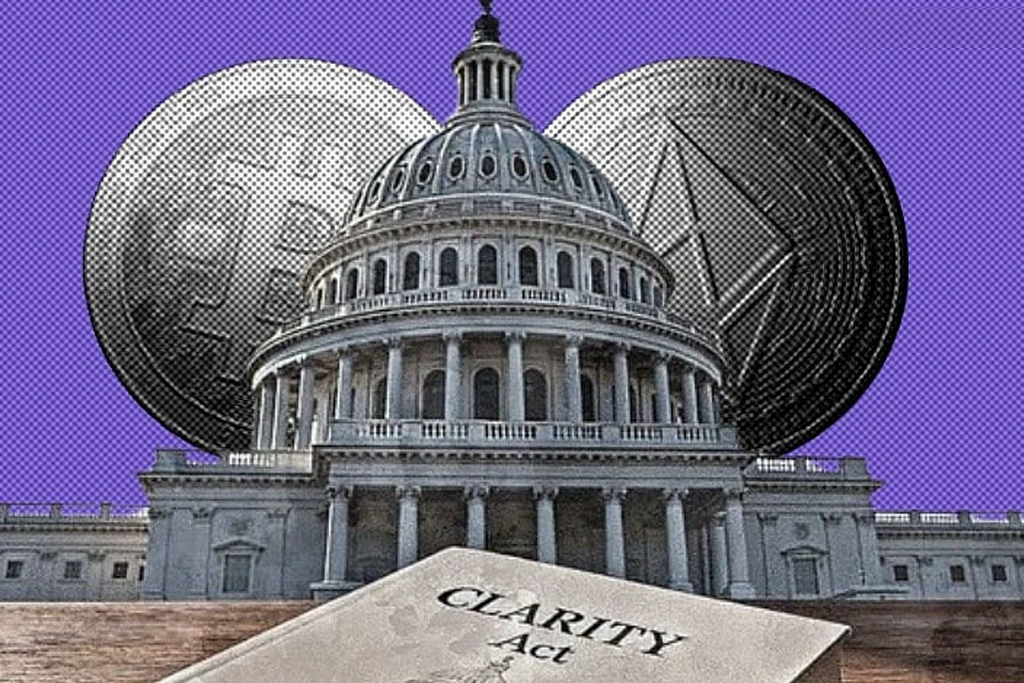
The CLARITY Act has advanced through the Senate Banking Committee, marking the most significant progress yet in congressional efforts to establish a comprehensive regulatory framework for digital assets. The bipartisan legislation, designed to provide long-awaited regulatory clarity for cryptocurrency companies operating in the United States, cleared the committee with broad bipartisan support, setting the stage for a potential full Senate vote. This development represents a critical milestone for an industry that has operated under regulatory uncertainty for years, with conflicting guidance from various federal agencies creating significant compliance challenges for businesses and institutional investors alike. The bill advancement reflects growing bipartisan consensus that the United States risks falling behind other nations in the digital asset space without coherent federal regulation.
What the CLARITY Act Means for Crypto
The legislation establishes a clear division of regulatory authority between the Securities and Exchange Commission and the Commodity Futures Trading Commission, addressing the longstanding jurisdictional ambiguity that has confused market participants and hindered innovation. Under the proposed framework, digital assets deemed to be commodities would fall under CFTC oversight, while those classified as securities would be regulated by the SEC. This binary approach aims to eliminate the current patchwork situation where similar digital assets receive dramatically different regulatory treatment based on arbitrary distinctions or the identity of the issuer. Industry groups have long argued that such clarity is essential for institutional adoption and capital formation in the sector.
The bill includes specific provisions designed to promote innovation while strengthening consumer protections. Cryptocurrency exchanges and other service providers would operate under a consolidated federal licensing framework, significantly reducing the compliance burden that has increasingly pushed companies to incorporate and operate overseas. The legislation also establishes clear guidelines for custody of digital assets and sets capital requirements for exchanges handling customer funds. Industry advocates argue that clear regulation will actually accelerate adoption by institutional investors who have remained on the sidelines due to regulatory concerns, potentially unlocking billions of dollars in new investment.
Market Reaction and Industry Response
The advancement of the CLARITY Act generated measured optimism across cryptocurrency markets. Bitcoin and Ethereum remained relatively stable following the announcement, maintaining their positions near recent multi-month highs. Smaller altcoins and tokens associated with regulatory-sensitive sectors showed modest gains as investors assessed the implications of clearer federal oversight. Analysts noted that the legislation progress reduces one of the key structural risk factors that has weighed on cryptocurrency valuations, though implementation timelines and final regulatory details remain uncertain pending Senate floor action and eventual reconciliation with any House-passed legislation.
- The legislation establishes clear jurisdictional boundaries between SEC and CFTC oversight of digital assets
- Consolidated federal licensing framework reduces compliance burden for cryptocurrency businesses
- Consumer protection provisions address concerns raised by regulatory agencies and advocacy groups
- Bipartisan committee support suggests broad consensus on the need for regulatory clarity
- Industry advocates predict accelerated institutional adoption following implementation of clear rules
- Companies currently operating overseas may return to the United States under clear regulatory framework
According to industry analysts, the CLARITY Act represents the most comprehensive attempt to date to resolve the regulatory fragmentation that has fragmented cryptocurrency markets and hindered development of the digital asset industry in the United States.
Opposition and Outstanding Concerns
Not all observers have embraced the legislation equally. Some consumer advocacy groups argue that the framework does not adequately protect investors from fraud, market manipulation, and operational risks that remain prevalent in cryptocurrency markets. Others contend that the legislation grants too much discretionary authority to federal agencies without sufficient congressional oversight or enforcement mechanisms. Senator Elizabeth Warren and other progressive lawmakers have raised concerns about the potential for the bill to benefit large cryptocurrency companies at the expense of consumers and retail investors who lack sophisticated resources to navigate complex digital asset investments.
Environmental advocates have also raised questions about the energy consumption associated with certain cryptocurrency operations, particularly those using proof-of-work consensus mechanisms like Bitcoin. While the legislation does not directly regulate energy consumption by mining operations, some sponsors have indicated that future legislation may address these concerns. The bill Republican sponsors argue that innovation-friendly regulation will ultimately benefit both consumers and the broader economy, creating jobs and investment opportunities in the United States rather than allowing these activities to migrate to more permissive jurisdictions overseas.
Timeline and Political Prospects
The legislation now moves to the full Senate, where its ultimate fate remains uncertain but where prospects have improved noticeably following the committee vote. Some senators have expressed concerns about the scope of regulatory authority granted under the bill, while others have questioned whether additional safeguards for consumers and investors are necessary before federal oversight expands. The Biden administration has indicated general support for comprehensive cryptocurrency regulation but has not formally endorsed this specific legislation, leaving room for negotiation on key details during the Senate floor process.
Industry observers suggest that the bill could reach the Senate floor within the coming weeks if Senate leadership decides to prioritize the legislation. Given the demonstrated bipartisan support in committee, many expect the bill to pass with significant margins if it reaches the floor, though negotiations over potential amendments could complicate the timeline and potentially require return to committee. The cryptocurrency industry has mobilized substantial lobbying resources to support the legislation, viewing it as essential to maintaining American competitiveness in digital asset markets and preventing continued capital flight to more accommodating regulatory environments in the Cayman Islands, Switzerland, and Singapore.