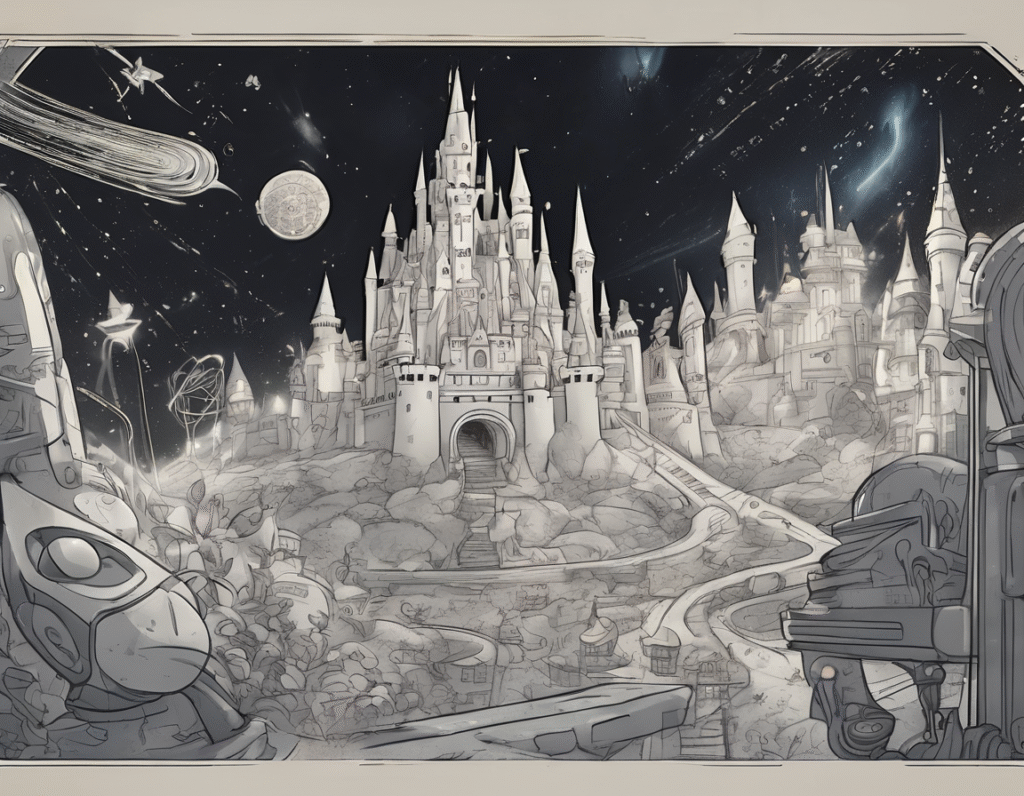
Disney and OpenAI Forge Major Alliance, Bringing Sora AI to Iconic Franchises The entertainment landscape is poised for a seismic shift as The Walt Disney Company enters into a significant partnership with OpenAI. This deal grants Disney access to OpenAI’s cutting-edge Sora video generation model, a tool capable of creating hyper-realistic video from simple text prompts. The move signals Disney’s aggressive push to integrate artificial intelligence across its vast creative empire, from film and television to theme parks and advertising. While financial terms remain undisclosed, industry observers describe the agreement as expansive, covering a broad range of applications. Disney plans to leverage Sora for internal storyboarding, marketing material generation, and potentially even for creating final visual effects and animated sequences. The technology promises to drastically reduce production times and costs, allowing for rapid iteration on concepts that would traditionally require extensive manpower and resources. The announcement has ignited a firestorm of speculation and memes within online communities, particularly focusing on the surreal and sometimes unsettling potential of applying advanced AI to Disney’s century-deep vault of beloved characters. Jokes and AI-generated images depicting scenarios like Donald Duck operating a clandestine laboratory or Mickey Mouse in dystopian futures have proliferated, highlighting both the creative possibilities and the profound cultural unease the partnership inspires. Proponents within the company argue that AI tools like Sora are merely the next evolution in creative technology, comparable to the advent of computer-generated imagery. They envision a future where filmmakers can visualize entire worlds with a few sentences, where personalized animated shorts can be generated for fans, and where theme park experiences become dynamically adaptive. The potential for new forms of interactive and personalized storytelling is a key driver behind the investment. However, the deal faces immediate and fierce criticism from multiple fronts. Many artists and animators within and outside Disney express deep concern that the adoption of AI will lead to widespread job displacement, devaluing traditional artistic skills and leading to a homogenization of style. Ethical questions are also rampant, focusing on the training data for models like Sora, which likely includes copyrighted work from artists without compensation or consent. Furthermore, the specter of deepfakes and misinformation looms large. The ability to generate convincing video of iconic characters saying or doing anything presents a formidable challenge for content authenticity and could be weaponized for malicious purposes. Disney will need to develop robust watermarking and verification systems to maintain trust. This partnership places Disney at the forefront of a major industry inflection point. As one of the world’s largest and most influential content creators, its embrace of generative AI video will undoubtedly pressure competitors to follow suit, accelerating a transformation across all media. The coming years will test whether this technology can be harnessed as a genuine tool for augmentation and wonder, or if it will ultimately flood the ecosystem with what critics decry as algorithmic slop, undermining the very artistry that built the Disney legacy. The journey to infinite synthetic worlds has officially begun, and its destination remains uncertain.