
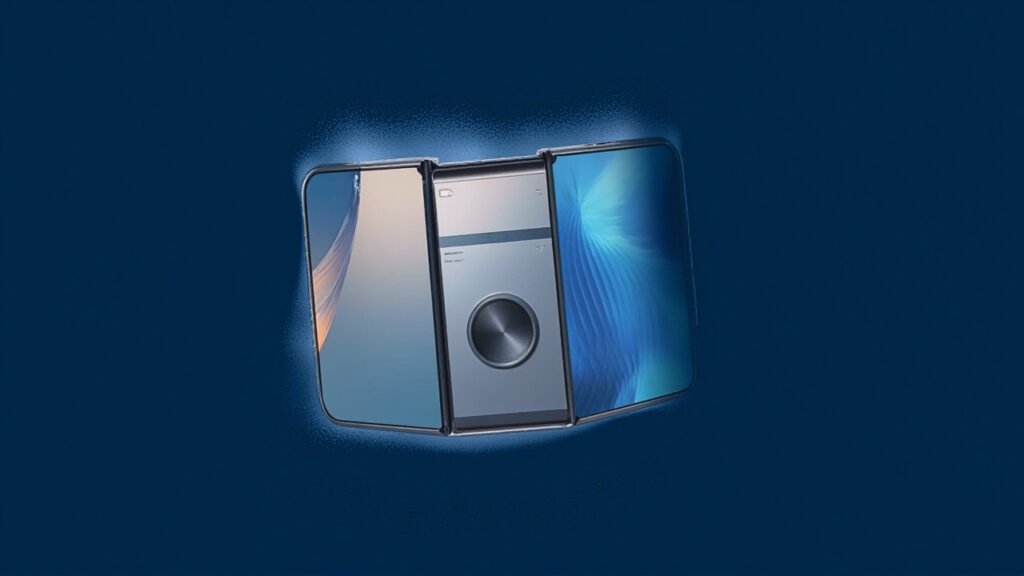
Huawei Mate XT 2 arrived on stage in Guangzhou on September 7, 2026, as the company’s second-generation tri-fold smartphone and the first handset powered by the Kirin 9050 Pro chipset. Unveiled just two days before Apple’s scheduled ‘Surprise and Shine’ event, the launch cements Huawei’s intent to dominate the premium foldable conversation in China, where it already leads the broader smartphone market. Sales open on September 12, positioning the device as a deliberate counterpunch to Apple’s first foldable iPhone.
Starting at 19,999 yuan (approximately USD $2,980) for the 256GB variant, pricing climbs to 24,999 yuan (around $3,725) for a 1TB model with a hardware-level privacy display, and tops out at 29,999 yuan (roughly $4,469) for a Collector Edition. Executive Director Richard Yu acknowledged during the launch that pricing remains a real challenge, because memory costs have risen sharply, even as Huawei reported strong first-half revenue despite mounting research spending under continued US tech restrictions.
Huawei Mate XT 2: Kirin 9050 Pro and the LogicFolding Architecture
The Kirin 9050 Pro is the centerpiece of Huawei Mate XT 2, debuting a design language the company calls LogicFolding. Rather than placing logic blocks side by side, the architecture stacks them in layered tiers inside a single die, a layout Huawei claims lifts transistor density by 53.5% to roughly 238 million transistors per square millimeter. Internal benchmarks cited by the company point to a 42–46% performance uplift over the Kirin 9030 Pro used in the original Mate XT, a generational leap that the tri-fold form factor is designed to showcase.
The chip also drives the device’s adaptive power management, sustaining sustained workloads across the unfolded 10.2-inch OLED panel without the thermal throttling that hampered earlier tri-fold designs. For Huawei, the LogicFolding pitch is as much a sovereignty statement as a specification sheet: it is engineered entirely outside the US semiconductor tooling pipeline, a point the company leaned on heavily during its H1 earnings call.
Hardware, Displays, and Camera System
Huawei Mate XT 2 introduces a meaningful shift in folding mechanics, moving from the original’s outward-folding S-shape to an inward-folding Z configuration that shields the flexible OLED when closed. The 10.2-inch inner display runs at 3K resolution with a 1–120Hz LTPO adaptive refresh, paired with a 6.5-inch cover panel for one-handed use. At its thinnest unfolded point the chassis measures just 3.5mm, total weight lands at 299 grams, and Huawei has secured IP58 and IP59 dust and water resistance ratings, an engineering first for any commercially available tri-fold.
The camera array carries a 50MP main sensor with a 1/1.28-inch footprint, variable aperture, optical image stabilization, and RYYB color filtering, flanked by a 40MP ultrawide, a 50MP periscope with 3.5x optical zoom, and a multi-spectral true-to-color module. Dual 8MP selfie cameras sit on both the inner and outer faces. The privacy display variant uses a directional sub-pixel layer to narrow the side-angle viewing cone, the first hardware-level implementation in any phone.
Stacking Up Against Apple and Xiaomi
Huawei enters the September showcase window from a position of strength, having led China’s smartphone market last quarter with 22.6% share against Apple’s 18.1% and Xiaomi’s 12.4%, according to industry shipment data. The September 9 Apple event is widely expected to feature the company’s first foldable iPhone, while Xiaomi has scheduled its own foldable announcement the same week, turning mid-September into a three-way contest for the high-end foldable buyer.
The strategic timing matters. By opening sales on September 12, Huawei Mate XT 2 captures three full days of solo headlines before Apple’s reveal, a window the company is using to reinforce its narrative of indigenous silicon and design leadership. With sustained demand visible in its first-half results and a tri-fold that finally folds inward, Huawei is signaling that the next chapter of the foldable race will be written in China as much as in Cupertino.
The significance of Huawei Mate XT 2 extends well beyond its price tag or its place in the September launch calendar. The Kirin 9050 Pro’s LogicFolding architecture represents a notable departure from conventional mobile silicon design, arranging transistors in three-dimensional stacks much closer to the layout used in high-bandwidth memory than to the planar approach typical of smartphone application processors. That architectural bet, combined with the symbolic weight of a flagship Kirin chip unveiled on stage, carries extra resonance because Huawei had not introduced a top-tier Kirin at a product launch since the Mate 40 in 2020. The intervening six years, shaped by US export restrictions and foundry constraints, make the 9050 Pro the company’s most consequential semiconductor statement of the restriction era and a marker that its in-house silicon stack is now commercially viable at flagship scale.
Equally important is the shift in folding mechanics. Huawei Mate XT 2 moves from the original’s outward-folding S-curve to an inward-folding Z configuration that protects the flexible panel when the device is closed, aligning the hardware with Samsung’s Galaxy Z Fold line and addressing one of the most persistent criticisms of the first Mate XT. On the demand side, Huawei’s 22.6% share of China’s smartphone market in the second quarter of 2026, ahead of Apple at 18.1% and Xiaomi at 12.4%, gives the company room to position foldables as a premium moat against the iPhone 17 Pro and iPhone 18 Pro cycles. That margin is narrowing, however. The 30-40% surge in mobile memory costs that Richard Yu flagged during the launch, part of a broader DRAM swing from oversupply to undersupply in 2026, explains the steep pricing and shows that even sovereignty in silicon does not insulate Huawei Mate XT 2 from the economics of the global memory cycle.
Source: Fortune India — https://www.fortuneindia.com/technology/battle-of-the-foldables-huawei-unveils-mate-xt-2-as-apple-xiaomi-launches-loom/157826