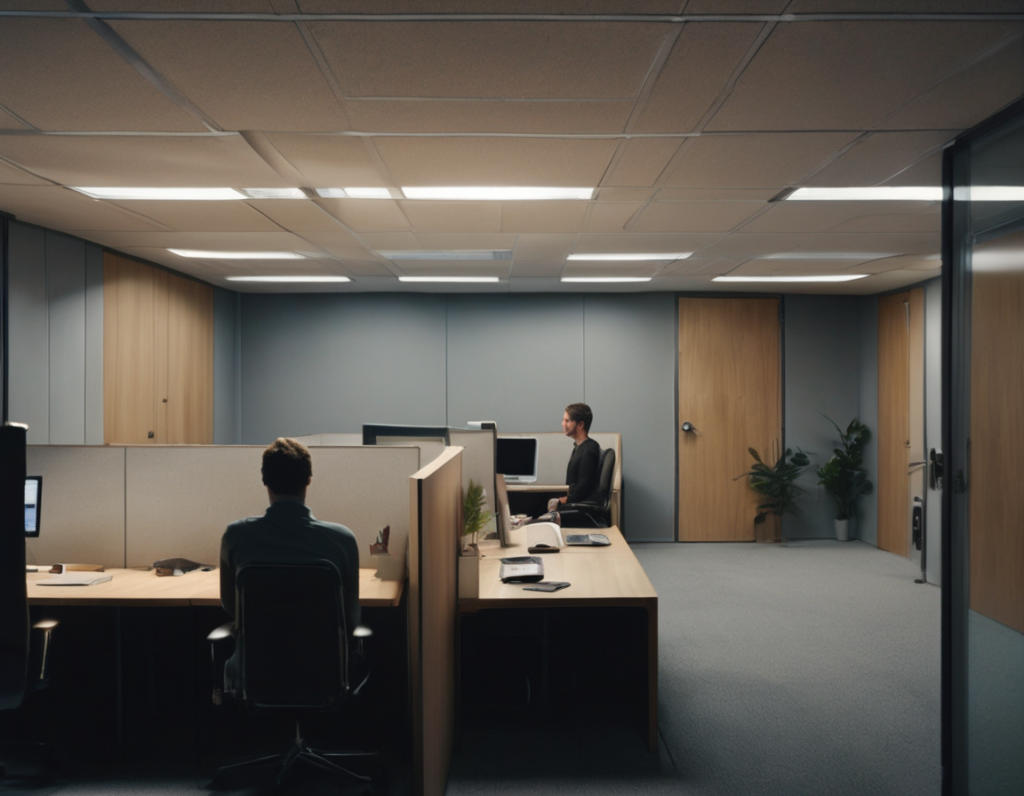
AI Startups Are Building Offices That Look Nothing Like Google or Meta If you have walked past a trendy tech office in New York City recently, you might have done a double take. The gleaming lobbies with beanbags and ping pong tables are disappearing. In their place, something stranger is emerging. Offices rented by artificial intelligence startups are deliberately dull, sparse, and almost anti-social. This is not an accident. It is a statement. Founders of these young AI companies are rejecting the Silicon Valley playbook. They do not want open floor plans designed for collaboration. They do not want nap pods or free kombucha. Instead, they are leasing spaces that resemble monastic libraries or old-fashioned law firms. Quiet, carpeted, and filled with private offices rather than communal desks. The logic is simple. These teams are small. Often fewer than twenty people. Their work is deeply technical and requires long stretches of focused, uninterrupted thought. Writing code, debugging models, and training neural nets are not group activities. They are solitary crafts. Noise cancelling headphones can only do so much. The real answer, these founders say, is architecture that encourages silence. One startup CEO explained that his team rarely speaks for hours at a time. When they do talk, it is in brief, intense bursts. The new office design reflects this workflow. Heavy doors, soundproofing, and a central quiet zone ensure that a single conversation does not disrupt everyone else. There is also a different kind of message being sent to investors and potential hires. A flashy office with a slide and a games room screams burn rate and hype. A modest, no-nonsense workspace signals frugality and focus. In a funding environment where investors are demanding discipline, a boring office is suddenly a status symbol. Some industry watchers are calling this the anti-WeWork movement. The co-working giant popularized the idea of offices as playgrounds. AI startups are pushing back, suggesting that productivity and creativity come from calm, not chaos. The trend is not universal. Larger AI firms with hundreds of employees still need open areas for all hands meetings. But for the early stage teams that define the sector, the message is clear. Your office should not try to entertain you. It should help you think.