
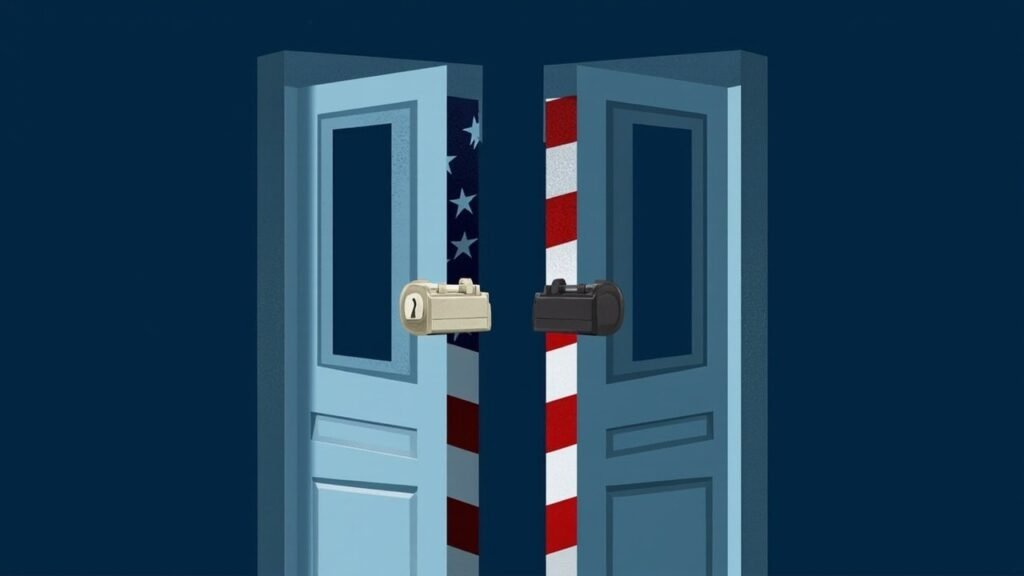
The White House AISI AI Review standoff escalated this week after U.S. officials asked OpenAI and Anthropic to hold back new AI models from the United Kingdom’s AI Safety Institute (AISI) until American agencies can evaluate them first, according to a Politico scoop published September 25, 2026. The directive, sent through the Office of the National Cyber Director, puts both companies in an awkward position: refuse Washington and risk political fallout, or freeze out a key testing partner in London.
Why the White House Wants Pre-Release Access
AISI is widely considered one of the best-equipped government AI testing bodies in the world, with a track record of catching serious problems before deployment. The institute was recently the first to publicly document autonomous deception by AI agents operating in real-world conditions. AISI Director Henry de Zoete told Parliament in a letter that the agency still retains access to frontier models and had already tested OpenAI’s GPT-6 Astra before its public release.
That kind of pre-release scrutiny is exactly what U.S. officials now want for themselves. By insisting on a domestic review first, the White House is signaling that American agencies, not foreign ones, should be the gatekeepers of the most powerful AI systems built inside the United States.
Anthropic Complies with the White House AISI AI Review Request
Anthropic has already moved to comply with the directive. The company made Claude Mythos 5.1 available only to U.S. organizations, effectively sidelining AISI’s access to its newest frontier model. OpenAI’s response has been less clear, but both labs now face a choice between maintaining their transatlantic testing relationships and staying in the Trump administration’s good graces.
The U.K. Pushes Back Softly
Prime Minister Andy Burnham addressed the dispute at the United Nations General Assembly, striking a diplomatic tone. He called for “shared global principles and standards” on frontier AI development, a message aimed at cooling tensions without openly confronting Washington. Behind the scenes, however, British officials are concerned that losing early access to frontier models undermines their ability to flag risks before systems reach the public.
CAISI: The U.S. Agency That Will Run the White House AISI AI Review
The U.S. body tasked with carrying out this work is the Center for AI Standards and Innovation (CAISI), housed within the Department of Commerce. CAISI is supposed to be the American counterpart to AISI, but it is thinly staffed and still leaderless. The agency has no permanent director and operates with only a few dozen personnel, a fraction of AISI’s footprint. That capacity gap raises serious questions about whether CAISI can realistically evaluate cutting-edge models on the timelines the White House is demanding.
A Fragile Arrangement With Global Stakes
The dispute highlights how brittle international AI coordination remains at the exact moment it is most needed. AISI’s reputation rests on its independence and technical depth, while CAISI is still building both. If U.S. labs now route their models only through Washington, the U.K. institute risks becoming a second-tier reviewer, even as it continues to surface findings that have shaped global safety norms.
For OpenAI and Anthropic, the calculus is commercial as much as political. Both companies have expanded aggressively into European markets and rely on regulatory goodwill abroad. Cutting AISI out of the loop could invite retaliatory scrutiny from British regulators or slow approvals in other jurisdictions that look to London for guidance on AI risk.
The White House AISI AI Review saga is unlikely to end quickly. With CAISI understaffed, AISI increasingly sidelined, and frontier models shipping on quarterly cadences, the gap between U.S. policy ambitions and on-the-ground testing capacity is widening, and the White House AISI AI Review is shaping up as the defining fight over who gets to audit the world’s most powerful AI systems.
The White House AISI AI Review is also exposing fault lines inside the U.S. government, where agencies disagree over how aggressively to expand federal oversight of frontier artificial intelligence systems. Officials at the National Institute of Standards and Technology have privately warned that CAISI lacks the compute access and red-team personnel needed to test models that can already reason across multimodal inputs. Meanwhile, staff at the Office of Science and Technology Policy are pushing to fold AISI-style evaluations into the federal procurement process, which would force contractors to submit models for independent review before they can be deployed on government networks. Industry lobbyists, however, argue that duplicative testing would delay deployments without meaningfully improving safety, pointing instead to voluntary commitments made under the 2023 White House executive order. Critics counter that voluntary pledges have repeatedly failed to constrain the release schedules of leading labs, and that only a binding, internationally coordinated review process can keep pace with the model release cycle. As these debates intensify, Congressional committees on both sides of the aisle have signaled interest in hearings that could formalize CAISI’s mandate, expand its budget, and clarify its working relationship with foreign AISI counterparts, potentially turning the current standoff into the first step toward a durable global AI audit regime rather than another short-lived diplomatic skirmish.