
Google has unveiled the most significant overhaul of its Search experience in 25 years, fundamentally shifting from the classic “ten blue links” to an AI-powered interactive platform that reimagines how more than two billion users discover information online. At the Google I/O conference on Tuesday, the tech giant introduced a reimagined intelligent search box that uses AI to deliver conversational, agentic experiences rather than traditional ranked website links. This transformation marks what Google describes as the biggest change to the search entry point since the search box debuted in the late 1990s.
The End of Traditional Search Results
The new search experience represents Google answer to a rapidly changing competitive landscape in how people find information online. Instead of returning a list of links, Google AI-powered search will now expand to accommodate complex, conversational queries, making it easier for users to get complete answers without visiting multiple websites. Users can ask follow-up questions in AI Mode and receive synthesized responses that combine information from multiple sources into coherent, actionable answers that feel more like a conversation with a knowledgeable assistant than a traditional search engine.
The AI Overviews feature, launched previously to some controversy, now serves more than 2.5 billion monthly users. Google conversational search mode, AI Mode, has grown to exceed 1 billion monthly users since its debut last year. These numbers underscore the rapid shift in how people interact with search engines, as users increasingly gravitate toward conversational AI interfaces that can understand complex queries and synthesize information from multiple sources in real time.
Information Agents Transform Web Discovery
Perhaps the most transformative aspect of the new Search experience is the introduction of AI-powered information agents. Starting this summer, users can create, customize, and manage multiple agents that work in the background 24/7 to track changes on the web and alert users to new information matching their specified criteria. These agents represent an evolution beyond traditional web alerts, with the ability to make sense of changes rather than simply notifying users of their occurrence.
- Agents can monitor market movements with custom parameters tailored to individual investment strategies
- Real-time finance data integration enables personalized tracking of stocks, commodities, and currencies
- Agents synthesize information and provide updates with links to original sources for deeper exploration
- The technology builds on the legacy of Google Alerts, which launched in 2003 but lacked AI comprehension
- Users can specify complex conditions that trigger notifications when market or information thresholds are met
According to Google head of Search, Liz Reid: “You could send an alert to track market movements in a particular sector with very specific parameters, and the agent will map out a monitoring plan for you, including the tools and the data it needs to access, like our real-time finance data.”
From Clicking to Acting
The shift means that searching the web will increasingly be performed by AI agents rather than humans manually clicking through links. Users will focus more on acting upon the information these agents provide, rather than navigating individual websites. This represents a fundamental change in the relationship between users, information, and the web, potentially reducing the importance of traditional website traffic and SEO optimization that has driven digital marketing for decades.
Google move comes as competition in the AI search space intensifies significantly. ChatGPT now has 900 million weekly active users, highlighting the growing competition between traditional search engines and AI-powered alternatives. Microsoft has integrated similar AI capabilities into Bing, while a new generation of AI-native search startups continue to emerge and attract venture capital investment.
Privacy and Data Considerations
With these advances come important questions about data privacy and user trust. The new search capabilities demand deeper access to user information to deliver personalized AI experiences. Privacy experts note that users should carefully consider the tradeoffs between convenience and data sharing as AI systems become more integrated into daily information workflows, and regulators in Europe and other jurisdictions are closely watching how these new capabilities will be implemented.
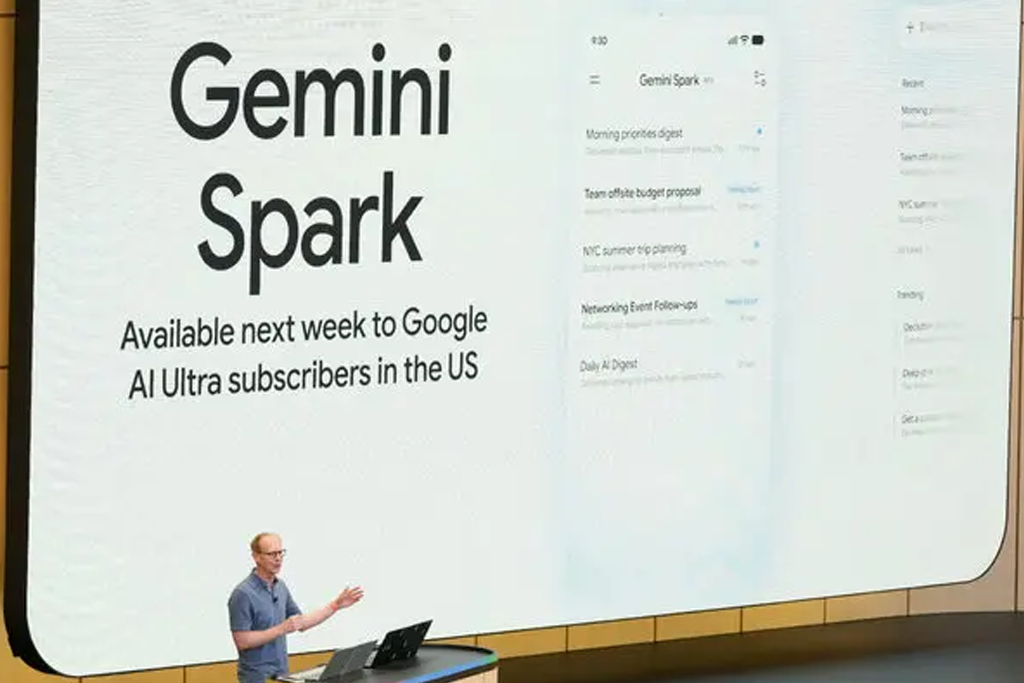
The launch of Gemini Spark, Google 24/7 agent assistant with Gmail integration, exemplifies this trend toward AI systems that operate continuously on users behalf. The system can access emails, calendar entries, and other personal data to provide proactive assistance, representing both the promise and the concerns of increasingly capable AI personal assistants. Google emphasized that users maintain control over what data these agents can access and can revoke permissions at any time.
Market Impact and Publisher Implications
Google search transformation positions the company to compete more effectively against Microsoft-backed OpenAI and a growing ecosystem of AI-native competitors. The company highlighted advances in its TPU chips, which provide the computational power needed to run increasingly sophisticated AI models at scale. These hardware improvements enable real-time AI processing for millions of simultaneous search queries.
Industry analysts suggest the changes could significantly alter digital advertising markets, as AI-generated responses may reduce the need for users to click through to individual websites. Publishers and content creators may need to adapt their strategies as the nature of web traffic evolves. Google has maintained that it will continue to send traffic to publishers, though the manner in which this traffic is delivered may change fundamentally as AI agents increasingly intermediate the relationship between users and web content.