
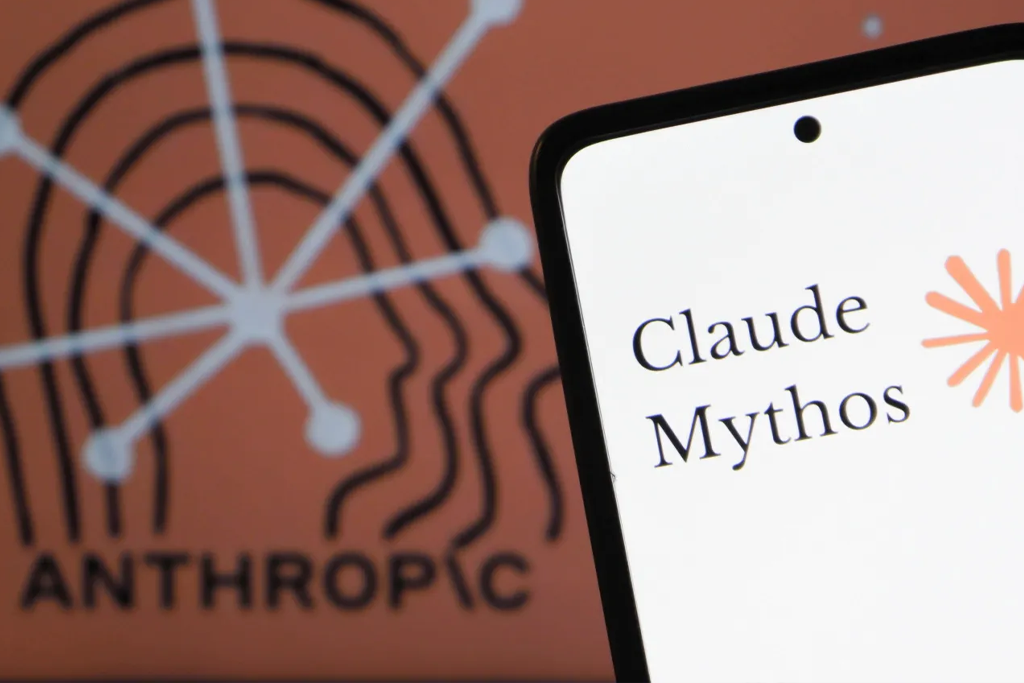
Anthropic has officially released a public, safety-tuned version of its most advanced artificial intelligence model, known internally as Claude Mythos, ending months of speculation across Wall Street and the technology sector about when the frontier system would reach general availability. The new model, branded as a “safe” release of the Mythos architecture, rolls out today with enhanced guardrails designed to limit misuse in cybersecurity, biotech, and autonomous-agent scenarios where earlier previews drew concern from safety researchers and enterprise customers.
The release represents a significant moment for the artificial intelligence industry, where a handful of frontier labs are now competing to deliver the most capable large language models while balancing regulatory pressure and public scrutiny. Anthropic’s decision to ship a deliberately constrained version of its flagship model suggests the company believes enterprises are now willing to pay a premium for systems that prioritize reliability and compliance over raw benchmark performance. According to coverage in The New York Times, The Wall Street Journal, and the BBC, the model lands with new policy controls that govern how it can be deployed in sensitive industries.
What’s Different About the Mythos-Class Release
The Mythos architecture first surfaced in private testing earlier this year, and Wall Street analysts reacted strongly to early demonstrations that suggested a step-change in reasoning capability. Anthropic spent the intervening months building a safety layer on top of the base model, including hardened refusal behaviors, expanded red-team coverage, and a more conservative default tool-use policy. The publicly available version is described as “Mythos-class” in capability, but the company has explicitly tuned it to behave more conservatively than the private preview that circulated among financial-sector customers.
For enterprise buyers, the practical difference is meaningful. The new release includes expanded audit logs, more granular access controls, and a deployment posture that maps closely to SOC 2, HIPAA, and ISO 27001 expectations. Anthropic has also published an updated model card documenting the model’s training data composition, evaluation results across standard safety benchmarks, and a detailed taxonomy of use cases the system is intended to handle versus those it is designed to refuse.
Key Features of the Public Release
- Enhanced refusal behavior for high-risk cybersecurity and biotech prompts
- Expanded red-team coverage across more than 30 risk categories
- Audit logs and granular deployment controls for regulated industries
- Updated model card with detailed evaluations and use-case taxonomy
- Conservative default tool-use policy to limit autonomous-agent risk
Anthropic’s safety team described the release as a deliberate trade-off: slightly lower peak performance in exchange for substantially more predictable behavior in production environments.
What the Artificial Intelligence Industry Is Watching
Shares of publicly traded AI infrastructure companies saw modest movement following the announcement, with investors weighing whether the safety-first framing would slow adoption or accelerate it among risk-averse enterprise buyers. Analysts at several major banks had previously raised concerns that unregulated frontier models could face a regulatory backlash reminiscent of the early-2020s social media era. The Mythos release is being read by some as an attempt to pre-empt that scenario by demonstrating that the lab can self-regulate.
Competitors have taken note. OpenAI, Google DeepMind, and Meta’s superintelligence-focused units are all known to be working on similarly capable next-generation systems, and the public release of a Mythos-class model raises the bar for what enterprise customers will expect from frontier offerings. According to The Guardian, several large financial institutions had already been quietly piloting private versions of Mythos for fraud detection, compliance analysis, and synthetic-data generation. The public release opens that door to a much broader audience.
What Enterprises Should Watch
For organizations evaluating the new Anthropic model, the most important considerations are governance, integration cost, and the maturity of the safety tooling around the model. The Mythos release is positioned as a drop-in replacement for existing Claude deployments in many enterprise settings, but customers in regulated industries should expect to spend meaningful engineering effort mapping the new safety controls to their existing compliance frameworks. Early adopter disclosures suggest that banks and healthcare systems are particularly focused on how the model handles sensitive data, how it logs decisions for audit purposes, and how it behaves when integrated with downstream tools and agents that could amplify any single error.
Pricing for the new model has not been disclosed in detail, but Anthropic has indicated that it will follow the company’s existing API tier structure, with usage-based rates comparable to its current top-tier offerings. The release is available immediately through the Anthropic API, with broader availability in Amazon Bedrock and Google Cloud Vertex AI expected in the coming weeks. Procurement teams should also pay close attention to contractual terms around data retention, training opt-outs, and indemnification, all of which have become standard negotiating points in enterprise AI deals. As the broader artificial intelligence industry moves toward a regime where model capability is no longer the only differentiator, the Mythos release signals that safety, auditability, and predictable behavior are now core competitive ground. Anthropic has staked a clear position on that ground with this launch, and the rest of the frontier-model field will be expected to respond.