
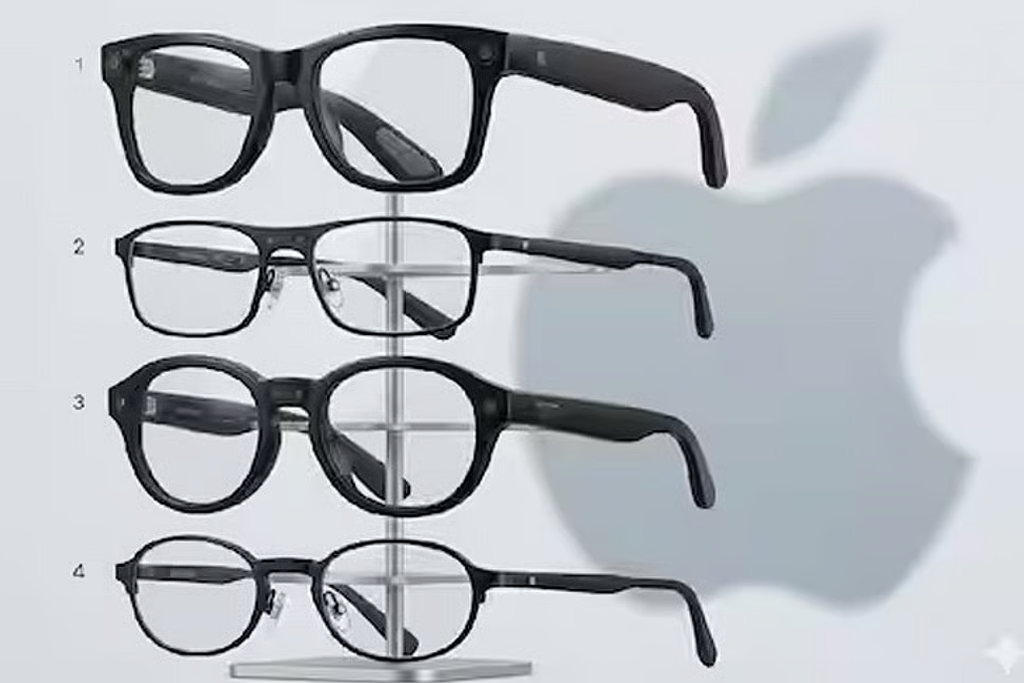
Four Designs, One Direction
Apple is getting serious about glasses. And no, we don’t mean Vision Pro — that spatial computing headset is impressive but barely leaves your living room. This is different. Apple is now reportedly testing four distinct designs for smart glasses that could ship to consumers — and one of them apparently looks a lot like Meta’s Ray-Ban smart glasses, according to sources speaking to TechCrunch.
The news comes from a TechCrunch report published April 12, 2026. Apple has been working on smart glasses for years — this is well documented. What’s new is the scope. Four different designs means Apple isn’t just experimenting anymore; it’s narrowing down options for a product it clearly intends to sell.
One design reportedly looks nearly identical to the Meta Ray-Ban Smart Glasses that have quietly become one of the best-selling wearables in the AI hardware space. Another is said to be sleeker and more fashion-forward. A third may include display functionality — a screen embedded in the lens. The fourth is reportedly still in earlier prototype stages.
Key Takeaway: Apple testing four smart glasses designs signals one thing clearly: Apple believes smart glasses are the next major computing platform — and it’s not going to let Meta own it.
Why This Matters More Than Another iPhone Accessory
Smart glasses aren’t just a new product category for Apple — they’re a strategic bet on what comes after the smartphone. The idea is straightforward: if AI is going to be always-on and context-aware, why is it stuck in your pocket? Smart glasses put AI directly in your field of vision, with microphones and cameras that can see what you see and hear what you hear.
Meta learned something important from its Ray-Ban glasses: people will wear them. Not because they have to — because they want to. The convenience of hands-free AI assistance, music, and calls without reaching for your phone has proven surprisingly compelling. Meta reportedly sold millions of units and is already working on the next generation.
Apple’s approach tends to be: let others prove the market, then enter with a higher-quality version. It happened with the iPhone (Palm and BlackBerry came first), the iPad (Microsoft had tablets), and Apple Watch (Fitbit and others were already in the market). Smart glasses appear to be following the same playbook.
The AI Connection Changes Everything
What separates this moment from earlier smart glasses attempts (Google Glass, anyone?) is AI. Modern smart glasses aren’t just displays — they’re AI interfaces. Meta’s Ray-Bans can identify landmarks, translate languages in real time, and answer questions about what you’re looking at. Apple has been building its own AI platform, Apple Intelligence, and integrating it across its ecosystem.
If Apple ships smart glasses with Apple Intelligence baked in — Siri that can see, hear, and understand your context in real time — that’s a fundamentally different product than what’s currently on the market. Combined with Apple’s ecosystem (iPhone, Mac, Apple Watch, AirPods), the experience could be far more integrated than anything Meta currently offers.
Key Takeaway: Apple’s move into smart glasses is the clearest signal yet that this category is real, not a fad. Meta opened the door. Apple wants to walk through it with the best product in the room.
Challenges Are Real
Let’s not get ahead of ourselves. Smart glasses face real hurdles: battery life, heat management, social acceptability of wearing a camera on your face, privacy regulations, and the ever-present challenge of making something people actually want to wear daily. Apple’s design obsession could help with the last point — but battery and heat are physics problems, not design problems.
Still, four designs in testing means Apple is working through these challenges seriously. The question isn’t whether smart glasses will become mainstream — it’s whether Apple or Meta gets there first.
Stay updated with the latest news at www.coincustard.com