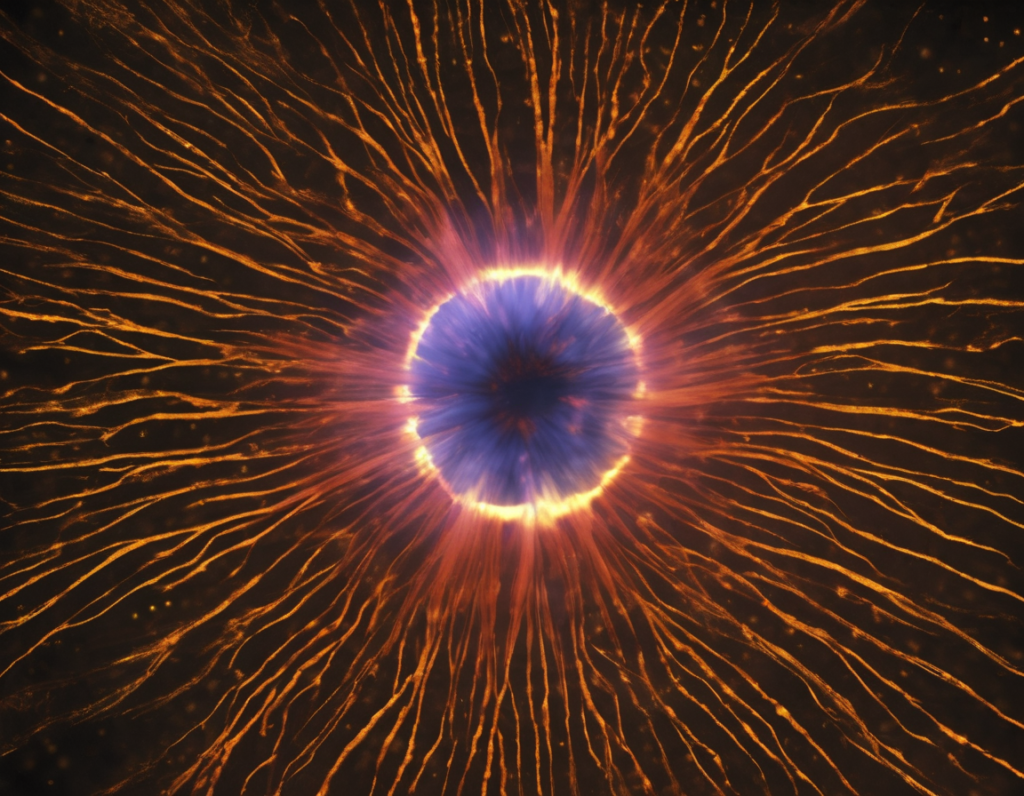
Vaccine Breakthrough and Space Plasma: This Week in Science This week brought a major advance in vaccine technology, a startling discovery about ancient Egyptian art, and a new view of plasma in space. For the crypto community, these developments offer more than just scientific curiosity. They signal trends in biotechnology, data storage, and energy that could influence the next wave of decentralized innovation. The biggest news came from the field of mRNA vaccines. Researchers announced a new delivery method that could make these vaccines stable at room temperature for months. Current mRNA shots require ultra-cold storage, limiting their use in remote areas. This breakthrough uses a lipid nanoparticle that forms a crystal structure, protecting the fragile mRNA. If proven in humans, this could unlock global distribution for future pandemics. For crypto, the connection is clear. On-chain supply chains for temperature-sensitive goods will become more critical. Tokenized logistics and smart contracts tracking cold chain integrity could see increased demand as this technology scales. In a twist for history buffs, scientists used X-ray fluorescence to reveal hidden layers on ancient Egyptian paintings. They found that artists changed their compositions multiple times, like a digital artist reworking a layer in Photoshop. This non-invasive technique allows us to see the creative process of masters from thousands of years ago. For the digital art world, this highlights the value of immutable provenance. While an NFT can prove a piece is original, this research shows that the story behind the creation is equally important. Future NFTs might include metadata tracing the creative process, not just the final image. Space science delivered a spectacular view this week. The Solar Orbiter captured the highest-resolution images ever taken of the sun’s corona. More importantly, it recorded plasma jets erupting at speeds previously thought impossible. These jets could explain why the sun’s outer atmosphere is millions of degrees hotter than its surface. This has concrete implications. Understanding plasma behavior is key to achieving nuclear fusion on Earth. Successful fusion would provide unlimited, clean energy, changing the entire energy calculus for crypto mining. A fusion-powered grid would eliminate the carbon debate around proof-of-work, potentially stabilizing long-term Bitcoin mining economics. Finally, a team in Japan created a biocomputer using brain organoids. These tiny clumps of human neurons were trained to play a simple computer game. The organoids learned faster than silicon-based AI at the task. This raises profound questions about consciousness and computing. For decentralized systems, this suggests a future where biological networks could process information in ways silicon cannot. While decades away, smart contract platforms might one day verify computations performed by organic networks, creating a new asset class for data processing rights. This week’s science reminds us that reality moves faster than our predictions. Each breakthrough offers a glimpse of infrastructure that will require new digital primitives. From cold chain logistics to fusion energy and organic computing, the lines between biology, physics, and blockchain are blurring. Stay informed, because the next big crypto narrative might come from a lab, not a whitepaper.